
Last updated October 31, 2026
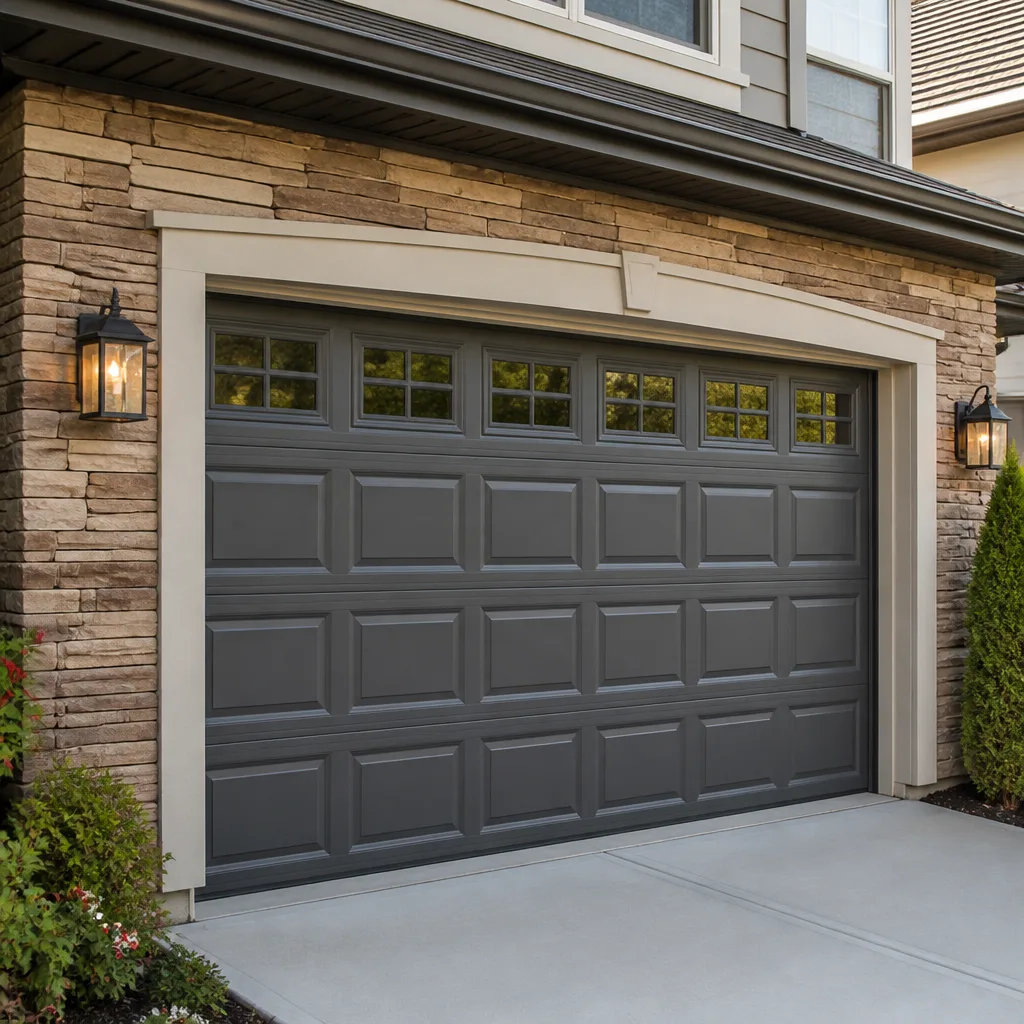 Raised-panel steel
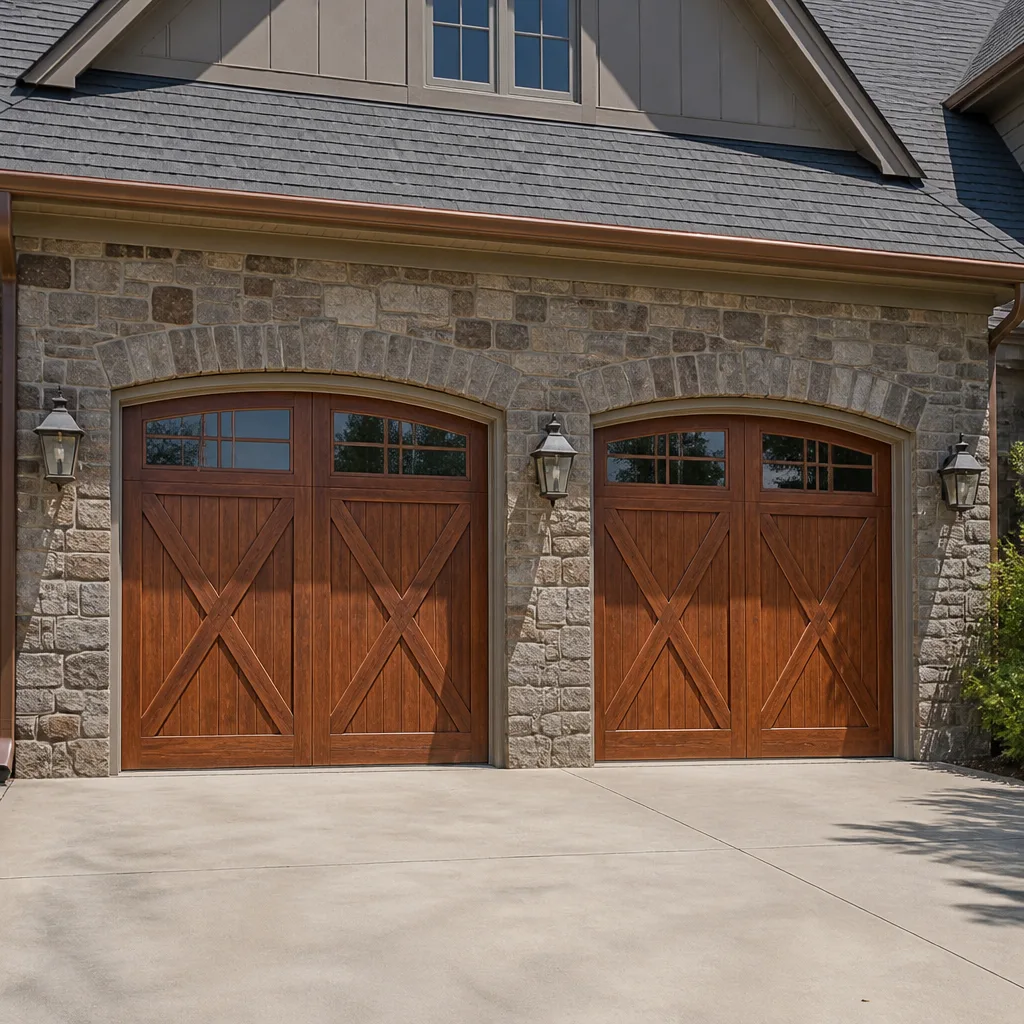 Carriage house
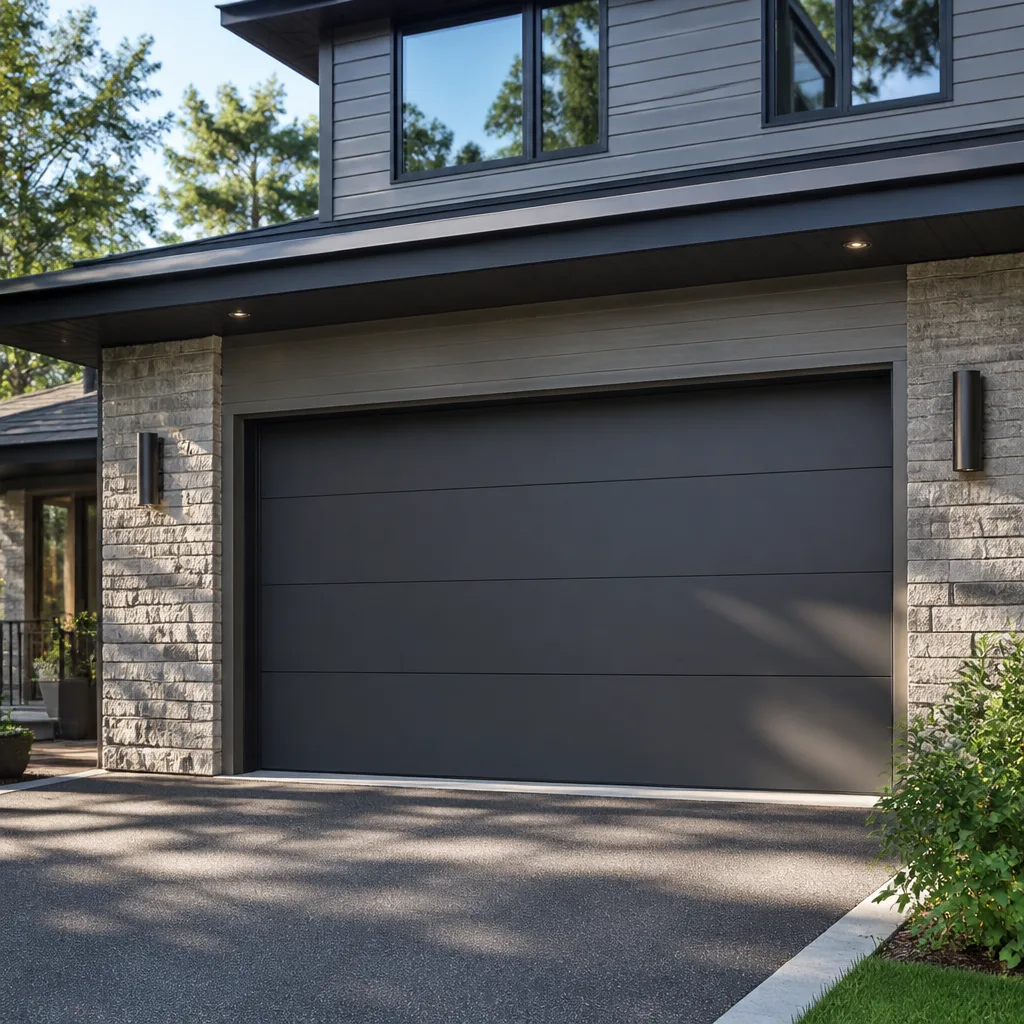 Modern flush
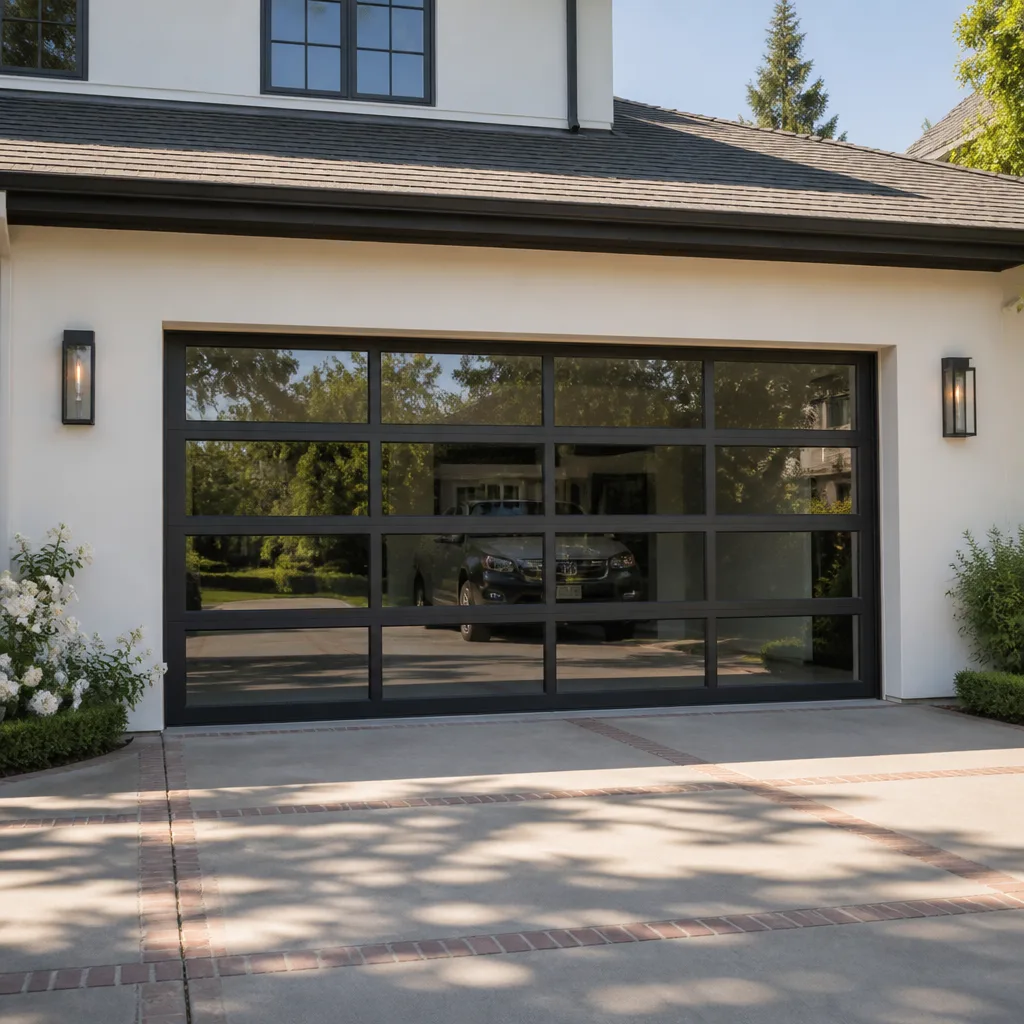 Full-view glass
 LiftMaster openers
 Chamberlain openers
Full 25-point door and opener safety check with every visit - springs, cables, rollers, tracks, and your LiftMaster or Chamberlain opener included
You get a price before we start. It does not change when the truck arrives.
Get your free estimateGarage Door Warning Signs: A Fort Lauderdale Homeowner’s Reference Guide
A garage door doesn’t fail all at once. It telegraphs trouble in stages, and the early signals are easy to dismiss as quirks: a soft pop when the door opens, a faint grinding sound that comes and goes, a door that seems a little slower than it used to be. In Fort Lauderdale’s salt air and humidity, those warnings move faster than they do inland. Surface rust becomes structural rust in months, not years. A spring that loses tension quietly will snap the week you need the door most. This guide explains what your garage door is telling you before it stops telling you anything at all, so you can make a repair call on your schedule instead of in a panic.
Styles & brands we work with
- Raised-panel steel
- Carriage house
- Modern flush
- Full-view glass
- LiftMaster openers
- Chamberlain openers
Quick Answer
The most common garage door warning signs in Fort Lauderdale are grinding or squealing sounds, visible rust on springs and cables, uneven or slow door movement, a door that feels unusually heavy when opened manually, and opener-specific signals like flashing lights or intermittent remote failure. Each symptom maps to a specific component: springs, rollers, hinges, tracks, or the opener drive. Catching these signs early usually means a repair measured in hundreds of dollars and same-day service. Ignoring them often means a broken spring, a door stuck halfway, or a car trapped in the garage. If your door is showing any of these signals, call (855) 382-3858 for a free assessment before the failure becomes an emergency, or read our guide on How to Hire a Garage Door Contractor in Fort Lauderdale: A Step-by-Step Guide to know what to expect.
Table of Contents
- What Each Sound Means: Grinding, Squealing, Popping, Rattling
- Rust Patterns and Spring Life in Fort Lauderdale’s Climate
- Slow or Uneven Movement: Reading the Early Signals
- The Heavy Door Test: The Most Underrated Warning Sign
- Opener Warning Signals: What Those Flashing Lights Actually Mean
- Fort Lauderdale-Specific Factors That Accelerate Wear
- Common Mistakes to Avoid
- When to Call a Professional
- Frequently Asked Questions
- The Bottom Line
What Each Sound Means: Grinding, Squealing, Popping, Rattling
Sound is the earliest and most reliable diagnostic tool a homeowner has. Every noise your garage door makes is a mechanical component communicating its condition, and each sound pattern points to a different part of the system. Fort Lauderdale homeowners hear these sounds against a backdrop of thunderstorms, pool pumps, and lawn equipment, which means subtle changes often go unnoticed until they become pronounced. Here is what the sounds actually mean.
Grinding: Metal on Metal Without Lubrication
Grinding is almost always rollers, bearings, or the opener’s drive mechanism operating without adequate lubrication. If the sound comes from the sides of the door as it moves, you’re hearing metal rollers running dry in their tracks. On a screw-drive opener, grinding from the motor head means the drive screw is dry or wearing. On chain-drive openers, grinding often indicates a chain that has lost tension and is dragging against the rail. Left unaddressed, grinding becomes scoring, and scoring means component replacement rather than lubrication. If you have a Genie or Chamberlain opener, the drive type matters: screw drives grind earlier and louder when dry, while belt drives rarely grind at all unless a bearing is failing.
Squealing: High-Frequency Friction Points
Squealing is a higher-pitched, more intermittent sound than grinding, and it usually points to hinge pins, spring coils, or roller bearings that have lost their lubrication film. In Fort Lauderdale’s humidity, we often see squealing from rust formation on hinge pins, especially on doors that face east and catch morning condensation. A squeal that happens only at specific points in the door’s travel indicates a specific hinge or roller binding. A constant squeal through the full cycle suggests the torsion spring coils are rubbing against each other, which is normal on older springs but becomes a problem when combined with visible rust.
Popping: The Spring’s Early Warning
A single pop when the door operates is the sound of a torsion spring that has begun to bind and release as it rotates. Springs under tension develop micro-fractures long before they break, and those fractures create brief catch-and-release events that sound like pops. Some popping is benign; a worn center bearing or a spring cone that has shifted can also pop. But repeated popping from the spring line, especially accompanied by visible rust, is one of the clearest pre-failure signs we see in Fort Lauderdale. Think of it as the spring telling you it’s working harder than it should. When you hear it, mark the spring as a replacement candidate sooner rather than later.
Rattling: Loose Hardware and Disconnected Components
Rattling is vibration translated through loose components. It could be a lag bolt that has backed out of the track bracket, a hinge that has loosened where it bolts to the panel, or a strut that has separated from the door face. On opener systems, rattling often comes from the chain or belt when the rail straps have loosened. Any rattle means something is no longer tight, and on a garage door that cycles hundreds of times a month, loose hardware creates wallowed-out holes and cracked panels. In Fort Lauderdale, where garage doors often serve as hurricane-rated barriers, a door with loose hardware is also compromised in ways that matter beyond noise.
If you’re hearing any of these sounds regularly, the Fort Lauderdale Garage Door Repair home page covers how we diagnose and repair each one at the source rather than masking the noise.
Rust Patterns and Spring Life in Fort Lauderdale’s Climate
Rust is not a single condition; it’s a spectrum, and knowing where your door falls on that spectrum determines whether you need a can of rust converter or a spring replacement. Fort Lauderdale’s combination of humidity, salt air, and frequent temperature swings makes rust a constant pressure on every steel component of a garage door system. The question is never whether rust will form. The question is what it’s doing to the metal’s structure.
Surface Oxidation vs. Structural Rust
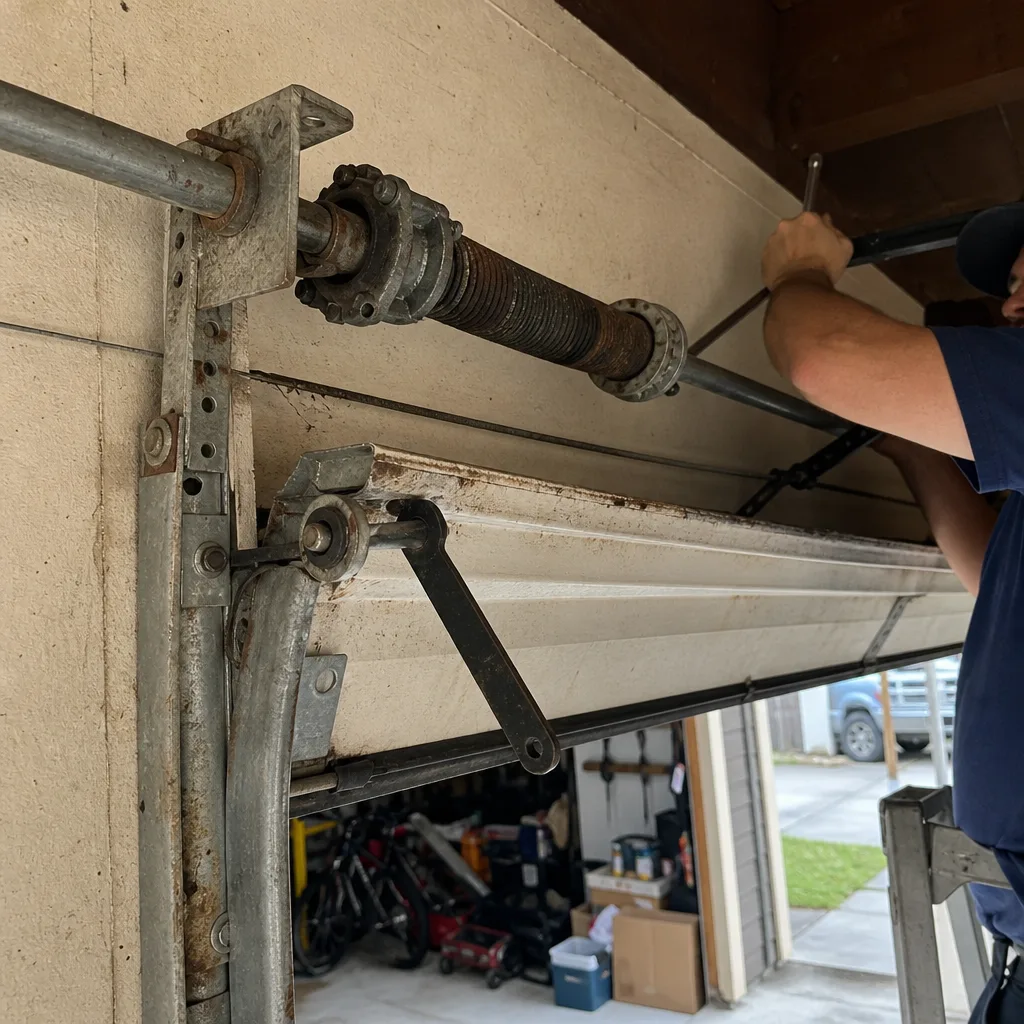
Surface oxidation is a thin, orange-brown film that sits on top of the metal. It looks worse than it is. You can often wipe it with a rag and it leaves a stain but no pitting. Structural rust is different: it creates flaking, scaling, and visible pits in the metal surface. When you tap a heavily pitted area with a tool, it sounds dull rather than ringing. That dull sound means the steel has lost cross-sectional thickness, which is the technical way of saying the component is now weaker than it was designed to be. For springs, cables, and bottom brackets, structural rust is a replacement condition, not a cosmetic one.
What Spring Rust Reveals
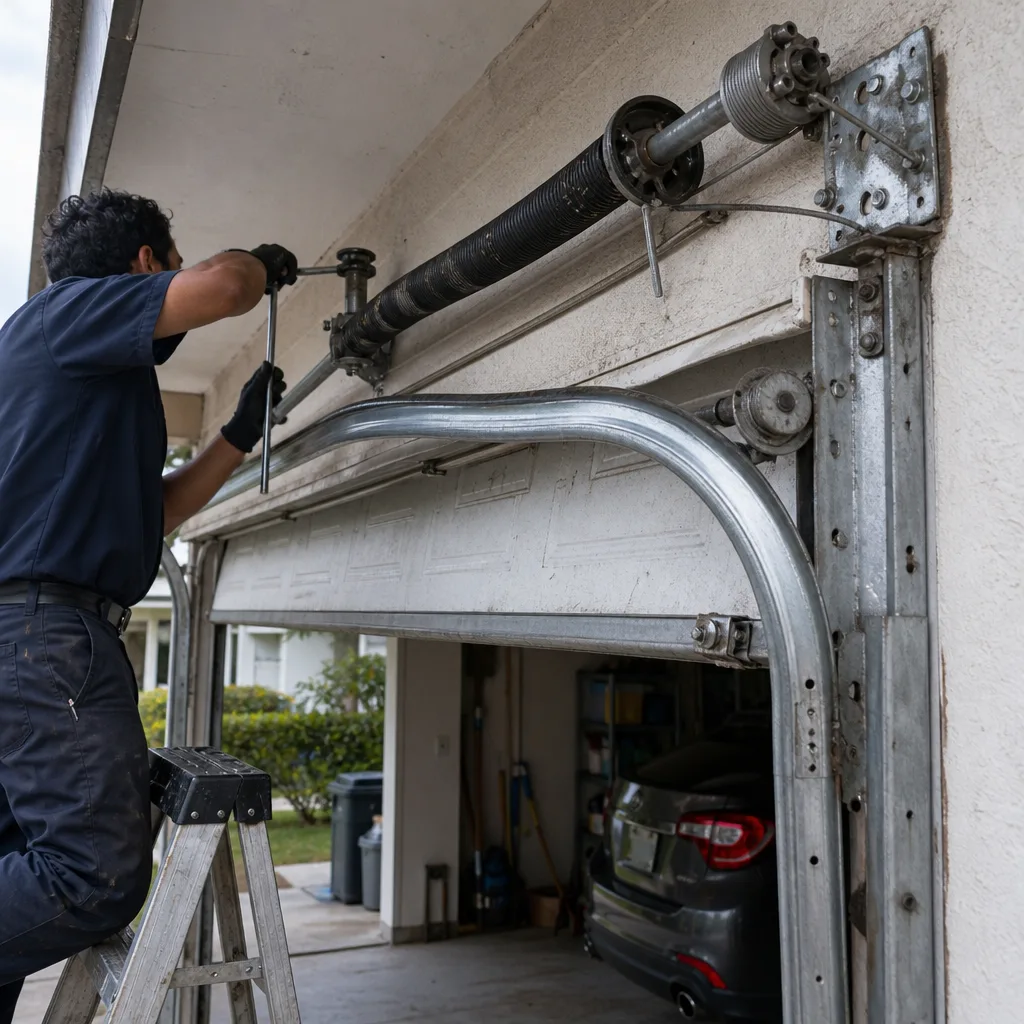
Torsion springs are coated from the factory, but that coating has a finite life, and in Fort Lauderdale’s coastal environment, it degrades faster than manufacturers’ average expectations. A spring with light, even surface rust may still have several years of functional life, especially if the door is balanced and used normally. A spring showing pitting, scaling, or rust concentrated at the coil contact points is on borrowed time. The contact points matter because coils rub against each other every time the spring winds and unwinds. Rust at those friction points creates stress risers, and stress risers are where springs break. If you see rust that flakes when you brush it, plan for replacement before the spring decides the schedule for you.
The Salt Air Factor
Homes within a few miles of the Atlantic face salt deposition that inland Fort Lauderdale neighborhoods don’t experience. Salt accelerates rust on everything metal in the garage, and door components are particularly exposed because they cycle through the opening and closing that brings salt air inside. The doors in neighborhoods like Coral Ridge, Las Olas Isles, and Harbor Beach show measurably faster spring and cable corrosion than doors in Plantation or Davie. If you live east of US-1, inspecting your cables and springs twice a year is not excessive; it’s proportionate to the environment your door operates in.
| Rust Type | What It Looks Like | Action Needed |
|---|---|---|
| Surface oxidation | Thin orange film, wipes off, no pitting | Clean and monitor; regular lubrication |
| Light pitting | Small, shallow pits visible on close inspection | Replace within 12 to 18 months |
| Scaling and flaking | Layers of rust peeling, metal visibly reduced | Replace as soon as possible |
| Rust at spring contact points | Rust concentrated between coils, not on outer surface | Treat as imminent failure; replace springs |
More on how we handle spring and cable replacement, including safety and same-day availability, is available on our Garage Door Repair in Palm Aire page for homeowners in that part of the metro area.
Slow or Uneven Movement: Reading the Early Signals
A garage door that opens and closes evenly at a consistent speed is a balanced door with a functioning opener. When that changes, even slightly, the door is telling you something. Slow or uneven movement is one of the most commonly ignored warnings because homeowners adapt to the door’s new rhythm without thinking about it. But the change itself is the information.
Symptoms and Their Mechanical Causes
Different patterns of slow or uneven movement point to different root problems. A door that is slow through the entire cycle is usually a spring tension issue or an opener motor that is working harder than it should. A door that moves normally through the first few feet and then slows down, struggles, or hesitates near the top is typically a spring balance problem: the spring has lost enough tension that it can no longer assist the door through the full arc of travel. A door that jerks or stutters at specific points points to track issues: a misaligned track, a roller binding, or a debris obstruction within the track channel itself. In Fort Lauderdale, salt and sand tracked into the garage from beach trips and rainy-season runoff contribute to track debris at rates well above the national average.
Checking Track Alignment Visually
- Stand inside the garage with the door closed and look up at the vertical tracks on either side.
- Visually trace each track from top to bottom. The gap between the track and the door edge should be even the full length. A gap that widens at one point means the track has shifted.
- Look at the mounting brackets. If any bracket has pulled away from the wall even a quarter inch, the track is no longer plumb.
- Open the door halfway and watch the rollers. If any roller wobbles side to side instead of rolling straight, that roller is worn or the track is out of tolerance.
- If the door rubs or bumps against anything at any point, mark the spot. That is a track alignment issue, not a door balance issue.
When the Opener Is the Culprit
An opener that strains against a door will run slower, run hotter, and eventually trip its internal thermal protection. If your door moves normally when disconnected from the opener and manually lifted, the problem is the opener’s motor, drive train, or force settings. If the door is hard to lift manually too, the problem is the door itself: springs, rollers, or tracks. This distinction matters because it determines what kind of repair you call for. A door specialist will check the door first. A generalist might replace the opener and leave the underlying spring problem unresolved. We work on LiftMaster, Chamberlain, Genie, Clopay, Amarr, Wayne Dalton, Craftsman, and Raynor equipment, so when we open the panel, we know exactly what we’re looking at. If you’re considering new equipment, our Choosing the Right Garage Door Brand: A Buyer’s Guide for Fort Lauderdale breaks down the options.
For opener-specific troubleshooting that goes deeper into motor strain and force settings, our Garage Door Opener Repair in Palm Aire page explains how we diagnose opener problems at the source.
The Heavy Door Test: The Most Underrated Warning Sign
The single most useful diagnostic action a homeowner can take costs nothing and takes 45 seconds. Disconnect the opener and lift the door by hand. If the door feels heavy, if it wants to fall when you release it, or if it requires real effort to move, the springs are not doing their job. That is the warning. The door may still open and close every day under opener power, but the springs are slowly failing, and every cycle you run with weak springs transfers more load to the opener motor, the cables, and the door panels themselves.
How to Perform the Manual Balance Test Safely
- Close the garage door completely.
- Pull the red emergency release handle on the opener rail. This disconnects the door from the opener carriage.
- Lift the door manually to about waist height using the handles or a safe grip point on the bottom edge.
- Release the door slowly. A properly balanced door will stay at or near the position where you released it. It should not drift down more than a few inches.
- If the door falls sharply, the springs are significantly under-tensioned or broken. If it stays put and feels comfortable to lift, the springs are within normal operating range.
A note of caution: this test assesses spring condition, but it does not mean you should attempt spring adjustment yourself. Torsion springs hold an enormous amount of stored energy, and springs under full tension can release that energy suddenly. The manual balance test is a diagnostic, not a repair procedure. If the door fails the test, leave the spring work to a trained professional. The test itself, done carefully with the door moving only under your manual control, does not expose you to spring tension.
What Heavy Really Means
When we say a door feels heavy, we’re describing the difference between lifting a properly balanced garage door and lifting one whose springs have lost tension. A balanced sectional door should feel like it weighs 20 to 30 pounds at the handle because the springs are doing the heavy lifting. An unbalanced door can feel like 100 pounds or more. That extra load is what kills openers prematurely and what makes a spring break feel sudden when it was actually years in the making. In Fort Lauderdale, where the average door cycles 3 to 5 times per day (higher than the national average because garages are often the primary entry point), spring wear accumulates faster than most manufacturers’ replacement schedules anticipate.
If the door fails the balance test and springs are the culprit, the same team that replaces the springs can also assess whether the door itself is worth keeping. Our Garage Door Installation in Palm Aire page covers when replacement makes more sense than repair, and we give you that straight answer rather than pitching a new door by default.
Opener Warning Signals: What Those Flashing Lights Actually Mean
Modern garage door openers are the most reliable component in the system and the most misunderstood when they communicate something. Every opener from the major brands uses a light-flash code system that most homeowners never learn to read. The result: a blinking light that means “sensor misalignment” gets ignored until the door won’t close at all, and a Wi-Fi module that drops offline gets dismissed as a router problem. Here is how to read the signals before they become a full opener failure.
Flashing Light Codes by Brand
LiftMaster and Chamberlain openers use similar logic because they share a manufacturing lineage. The most common pattern is a main light that flashes a set number of times, pauses, and repeats. Four flashes usually means the safety sensors are misaligned or blocked. Five flashes often indicates a motor overheat or thermal protection event. Six flashes points to a logic board or internal communication error. Genie openers use a different code structure: a single red flash followed by a sequence corresponds to specific sensor or force-setting issues. The learning point is not to memorize every code across every brand. It’s to recognize that the flashes are a diagnostic language, and if you see a pattern that repeats, it’s worth writing down and having interpreted.
Reversing Behavior That Changes Over Time
An opener that reverses direction unexpectedly is doing exactly what it’s designed to do: it has detected resistance and is backing off. The problem is what the resistance means. A new door with properly adjusted springs and clean tracks should not trigger random reversals. If you notice the door closing halfway and then reopening for no apparent reason, and this behavior increases over weeks, the opener is likely compensating for a mechanical issue in the door itself: a spring that has lost tension, a roller binding in the track, or a door that is dragging. The opener is not the problem. It’s responding to a problem. Diagnosing at the source means checking the door first, which is why we treat opener repair as a dedicated specialty that starts with the mechanical system the opener drives.
Wi-Fi and Smart Feature Dropouts
Smart openers from LiftMaster, Chamberlain, and Genie connect to home Wi-Fi and allow remote operation through apps. When the connection drops intermittently, most homeowners reset the router and move on. But repeated Wi-Fi module dropouts, especially when the signal drops only during door operation, can indicate a logic board that is beginning to fail or a power supply issue. The module is typically the first component to show symptoms because it operates at low voltage and is sensitive to the fluctuations that precede board failure. A single dropout is unremarkable. A pattern of dropouts, particularly if they began recently and worsen, is an opener warning sign worth a professional diagnostic call.
For opener-specific failures, brand-matched diagnosis matters. A technician who knows the difference between a LiftMaster logic board and a Genie force sensor adjustment can resolve the problem in one visit instead of two. That is exactly the service arc we cover, and it’s why homeowners with any of the eight major brands we service typically don’t need to call anyone else.
Fort Lauderdale-Specific Factors That Accelerate Wear
Garage door components wear out in every climate, but Fort Lauderdale’s specific conditions produce failure patterns that national maintenance advice doesn’t account for. Knowing what these local factors are gives you a better diagnostic baseline than any generic checklist.
Humidity and Salt Air
The combination of 70%+ average relative humidity and salt air near the coast accelerates corrosion on every bare or coated metal surface. Springs and cables are most exposed, but the less visible components suffer too: the bearings inside rollers, the shafts inside the torsion tube, and the internal gears of the opener drive. The practical effect is that a spring that might last 10,000 cycles in a dry climate typically fails earlier in Fort Lauderdale. Surface rust that appears in a Fort Lauderdale garage in a single wet season is normal. Structural rust that pits and flakes within two years is a call to action.
High Cycle Counts
Garage doors in Fort Lauderdale cycle more often than the national average. The garage is frequently the primary entry and exit point for the household, and with multi-car families, boats, and the general rhythm of South Florida life, a door may open and close 5 to 8 times per day. At 6 cycles per day, a door exceeds 2,000 cycles per year, which means a spring rated at 10,000 cycles lasts about 5 years. That is well within the window where spring replacement becomes predictable maintenance rather than an emergency. Homeowners who think their spring “should have lasted longer” are usually comparing against national advice that assumes 2 to 3 cycles per day.
Storm Season Stress
Hurricane season brings two pressures. First, doors rated for wind load take additional mechanical stress during storms, even when properly secured. The door assembly flexes under wind pressure, and that flex distributes force through the hinges, rollers, and track brackets. In the weeks after a close storm pass, we see an uptick in loose hardware, bent tracks, and spring fatigue in Fort Lauderdale. Second, the humidity spike during storm season accelerates the rust cycle. A door that was marginal before storm season is often in active failure by October. Paying attention to post-storm changes in door noise or movement is not paranoia; it’s calibrated awareness for a local environment that stresses doors differently.
Common Mistakes to Avoid
- Ignoring a noise because the door still works. Sound is the earliest diagnostic signal a door produces, and every week a grinding roller or popping spring is ignored increases the repair cost. A $15 roller replacement becomes a $200 track repair when the roller seizes and scores the track.
- Lubricating over rust without cleaning first. Spraying lubricant onto a rusted surface seals the rust under a film and continues the cycle. The correct sequence is clean, inspect, then lubricate. Fort Lauderdale’s humidity makes this more important here than in dry climates.
- Adjusting spring tension without training. Torsion springs under load are dangerous, and the winding bars and proper sequence matter. What looks like a simple adjustment is the single most common cause of garage-door injuries in South Florida. We’ve also seen under-tensioned springs that stripped opener gears within months because the door was no longer balanced.
- Replacing the opener when the door is out of balance. A heavy, unbalanced door kills openers. If you replace the opener without fixing the spring tension, you’ll be replacing the opener again in 18 to 24 months. Diagnose the door first, then the opener.
- Ignoring a single loose bolt or bracket. Loose hardware transfers load to components that were not designed to carry it. A track bracket that backs out puts uneven pressure on rollers and hinges, which then wear asymmetrically. The repair cost from a single loose bolt is often five times the cost of the five-minute adjustment.
- Holding off on rusted cable replacement because the cables “look fine.” Cables fail from the inside out. Surface rust on a cable often hides internal strand fatigue, and when a cable lets go, the door can drop unevenly and damage panels, tracks, and anything in the path.
- Assuming a new door fixes everything. If the tracks, hardware, or opener are the problem, a new door on old tracks will wear out prematurely. Any Garage Door Installation in Palm Aire should start with an assessment of what components are reusable and what should be replaced with the door.
When to Call a Professional
Some warning signs are diagnostic; some are definitive. If you hear a loud snap followed by the door not opening or closing, the spring has broken and that is a call-now situation. If the door falls when you release it during the manual balance test, the springs are not holding and professional attention should happen before the next full cycle. If you see visible cable fraying, rust that flakes, or the door is visibly crooked in the tracks, stop using the door and call. The same applies to opener smells: a burning or hot-metal odor from the motor head is an electrical warning, not a mechanical inconvenience. For every other symptom in this guide, a free assessment resolves the question. Fort Lauderdale Garage Door Repair offers free estimates in Fort Lauderdale. Call (855) 382-3858 and we’ll tell you what the door is saying, what it costs to fix, and whether repair or replacement actually makes sense.
Frequently Asked Questions
The most common warning signs we see in Fort Lauderdale are grinding or squealing sounds, visible rust on springs and cables, slow or uneven movement, a door that feels heavy when manually lifted, and opener lights flashing in a repeating pattern. Each of these maps to a specific component, and most can be caught before a full failure occurs. Call (855) 382-3858 if you’re seeing any combination of these signals, and we’ll diagnose the source rather than guessing.
Spring replacement in Fort Lauderdale typically falls in the $225 to $375 range for a standard single-door spring set, depending on spring size, door weight, and whether you opt for standard or high-cycle springs. High-cycle springs cost more up front but last two to three times longer, which matters in a high-cycle market like Fort Lauderdale where doors open and close 5 to 8 times a day. The price is always quoted and agreed before any work starts, so the number on the invoice matches the number you approved.
Most opener failures are repairable, and the repair is often a single component: a capacitor, a logic board, a gear kit, or a drive train part. The decision to repair or replace comes down to the age of the unit, the cost of the part, and whether the opener is still supported by its manufacturer. We diagnose the opener at the source and give you a straight answer on repair versus replacement, calibrated to the specific brand and model you have. Call (855) 382-3858 for an assessment.
A garage door reverses during closing because the opener has detected resistance and is backing off as a safety response. The resistance usually comes from the door itself: a spring losing tension, a roller binding, or debris in the track. The opener is responding correctly to a mechanical problem, which is why the fix should start with the door, not the opener. We check the door first, then the opener settings, which is how we resolve reversing issues in one visit instead of chasing symptoms.
Once a year is the minimum for most Fort Lauderdale doors, and twice a year makes sense if you live east of US-1, operate the door more than 5 times a day, or have a door that is 10 or more years old. The inspection should cover spring condition, cable integrity, roller wear, track alignment, and opener force settings. A free annual check catches most failures before they become emergencies.
A rusted spring is dangerous when the rust has progressed past surface oxidation into pitting or scaling, because pitting concentrates stress at the rust points and creates the failure site. A spring with structural rust can break without warning, and a broken torsion spring releases stored energy suddenly. If you’re unsure whether your springs have surface rust or structural rust, call (855) 382-3858 and we’ll evaluate them in person and give you an honest read on remaining life.
The Bottom Line
Your garage door talks before it breaks. The grinding, the popping, the rust, the heavy feel, the slow movement: each of those signals is a specific component asking for attention, and each is easier and cheaper to address early than late. In Fort Lauderdale’s climate and usage patterns, the window between the first warning and a full failure is shorter than most national advice assumes, which means inspecting your door and acting on what it tells you is the difference between a planned repair and an emergency. Fort Lauderdale Garage Door Repair covers the full service arc: repair, opener diagnostics, and installation, with brand-matched expertise on LiftMaster, Chamberlain, Genie, Clopay, Amarr, Wayne Dalton, Craftsman, and Raynor. When your door gives you a signal, act on it. Call (855) 382-3858 for a free estimate, and we’ll tell you exactly what the door is saying and what it costs to fix. For more guides & resources on keeping your door reliable, visit our blog.o fix it before it decides for you.
Written by the team at Fort Lauderdale Garage Door Repair, serving Fort Lauderdale since 2018.
See the difference
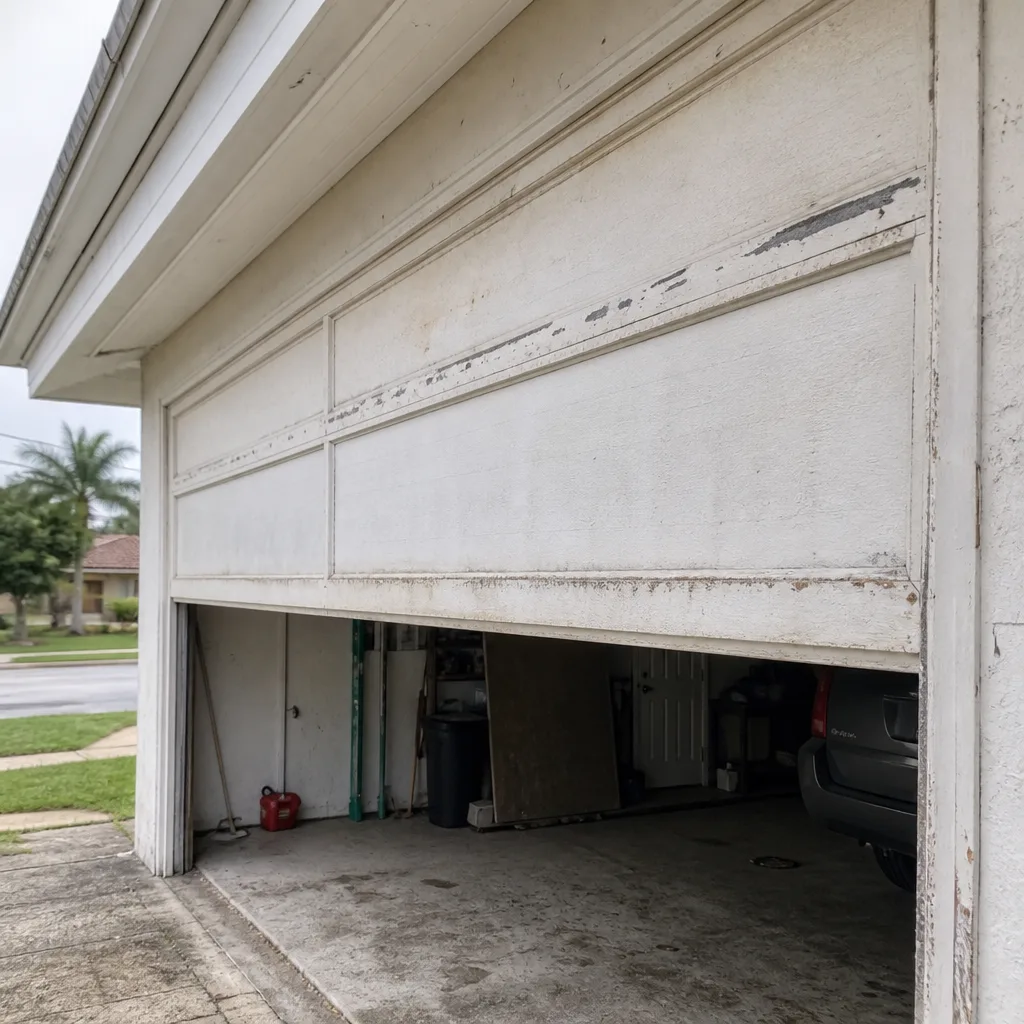 Before
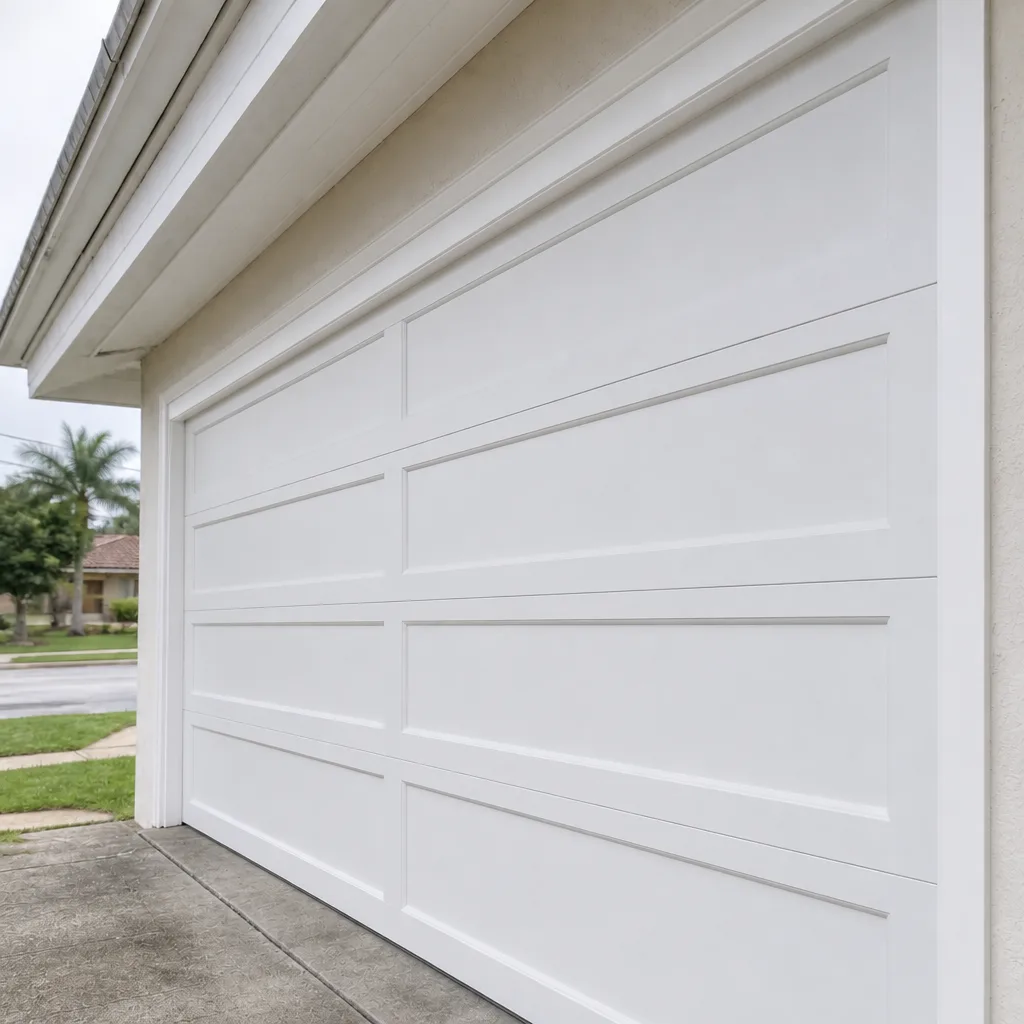 After
 Before
 After
 Before
 After