
Last updated October 31, 2026
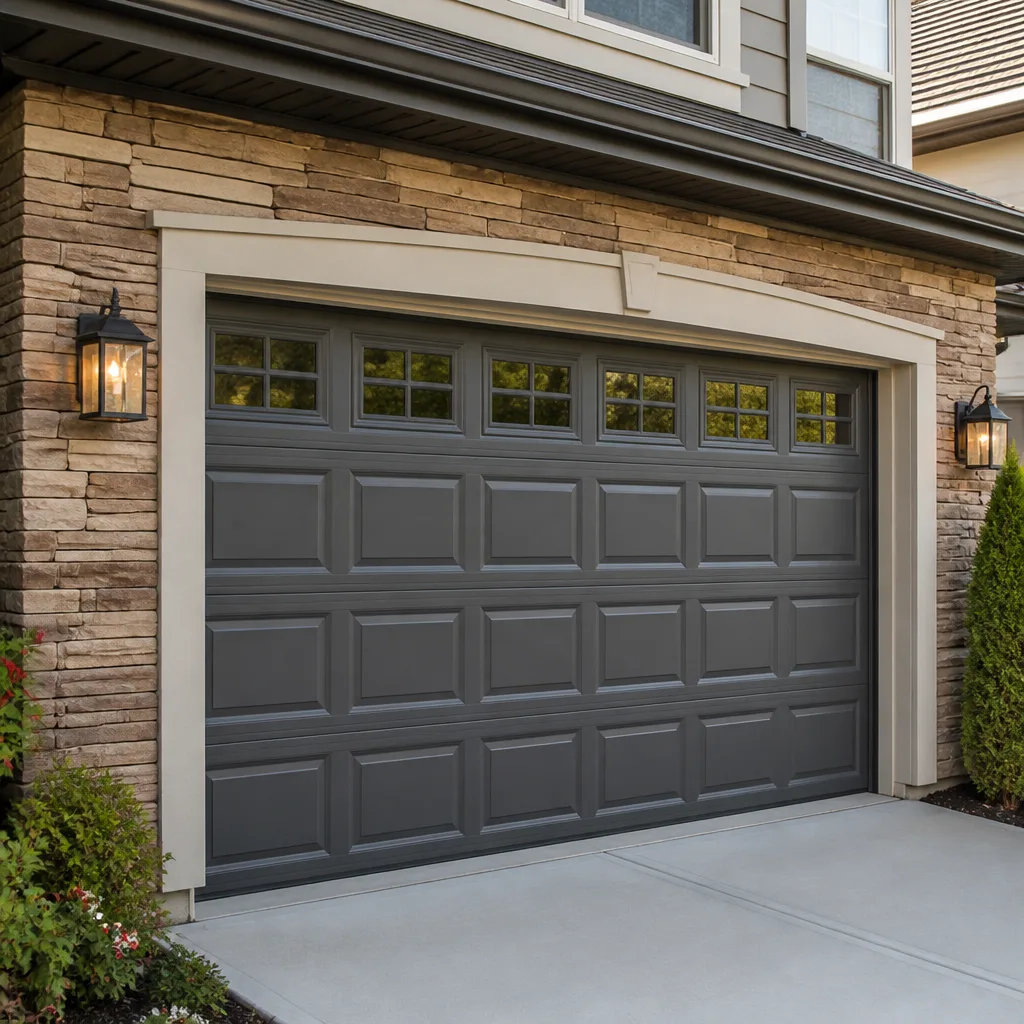 Raised-panel steel
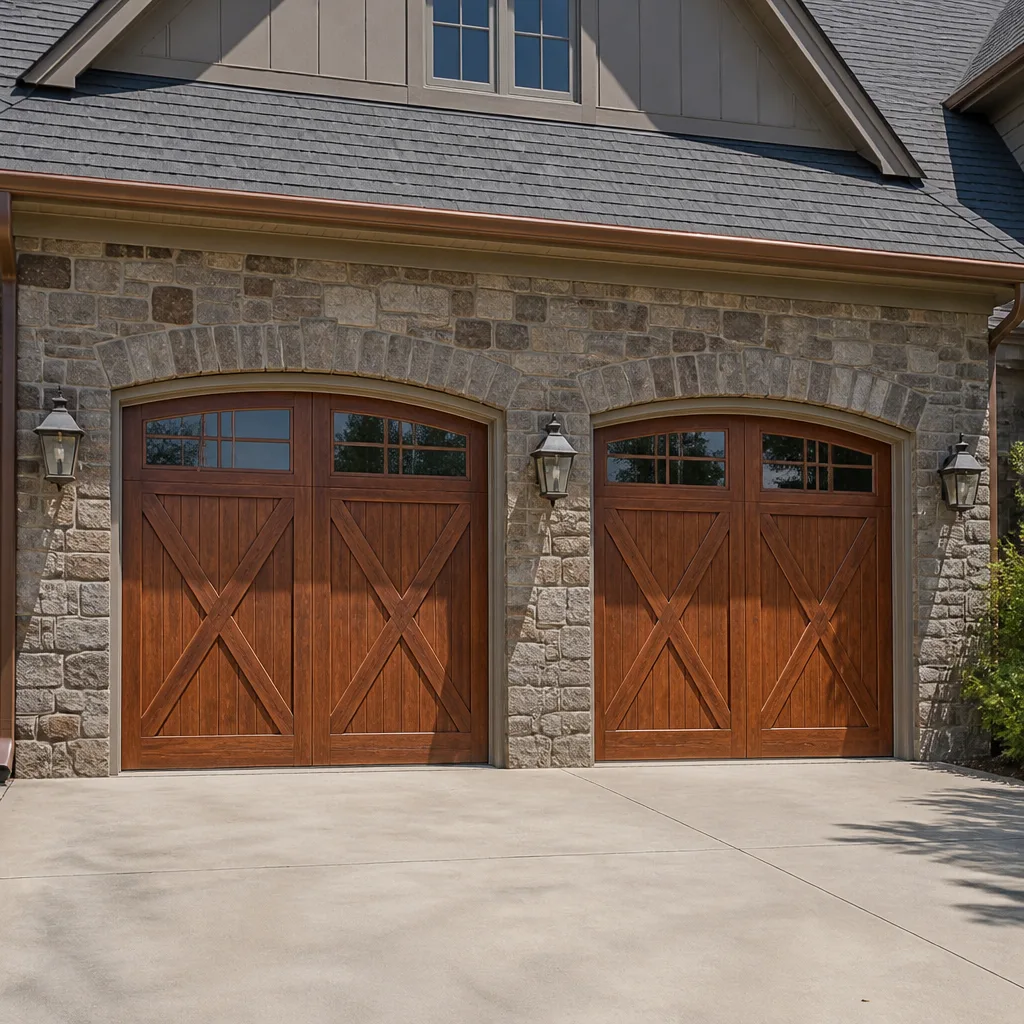 Carriage house
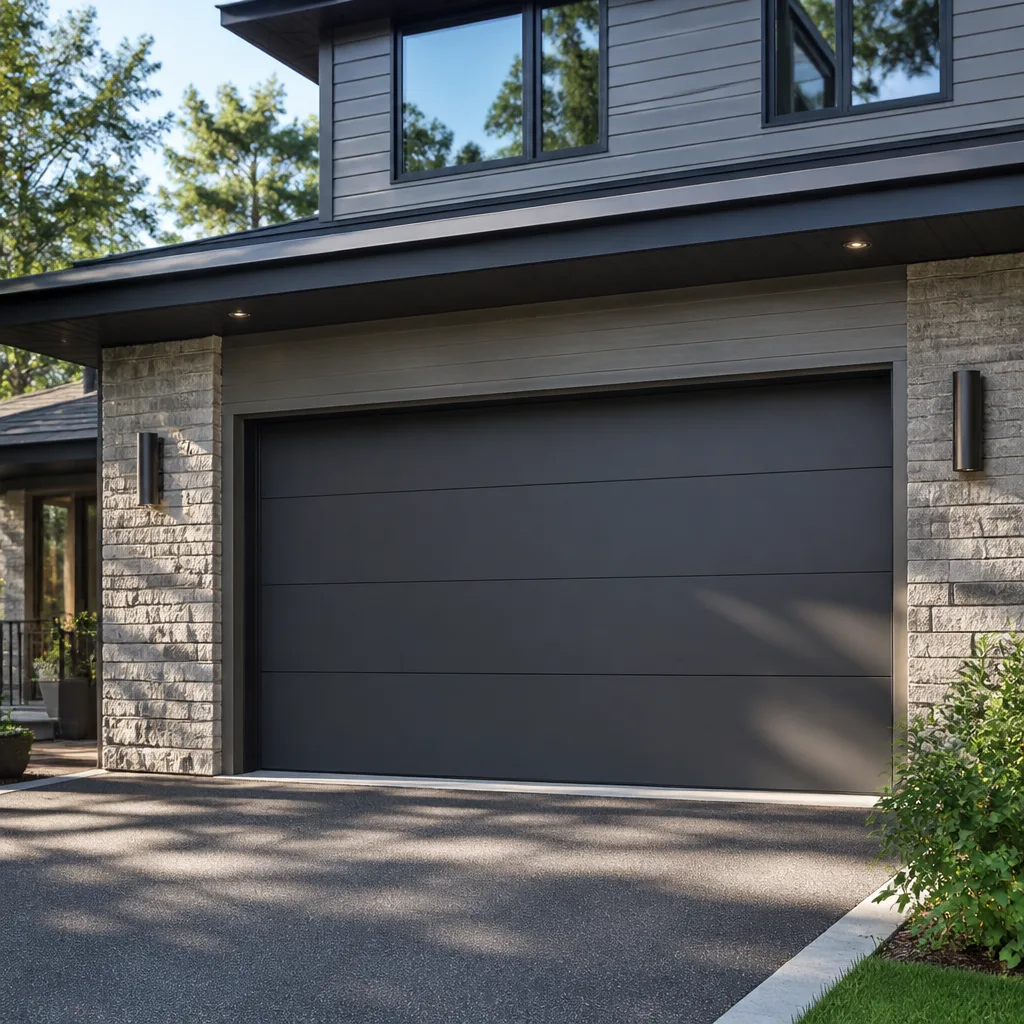 Modern flush
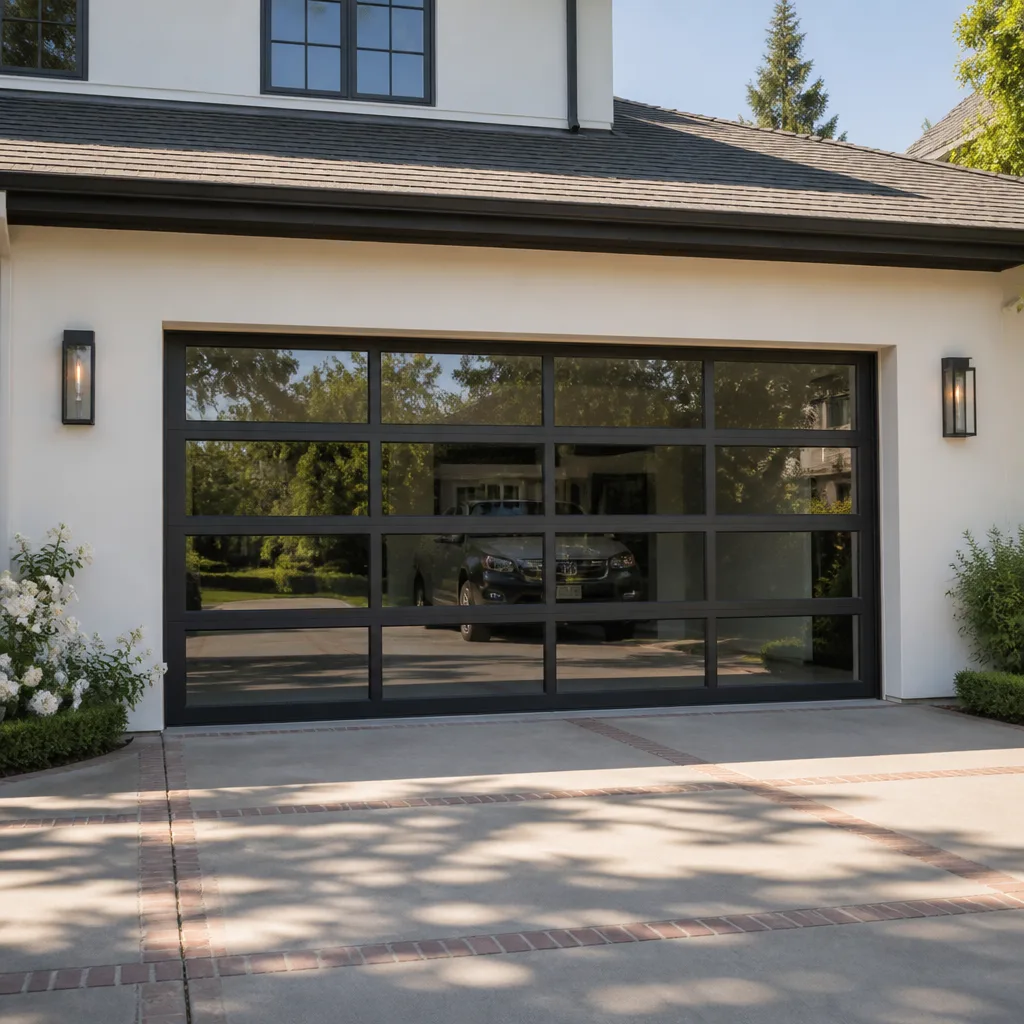 Full-view glass
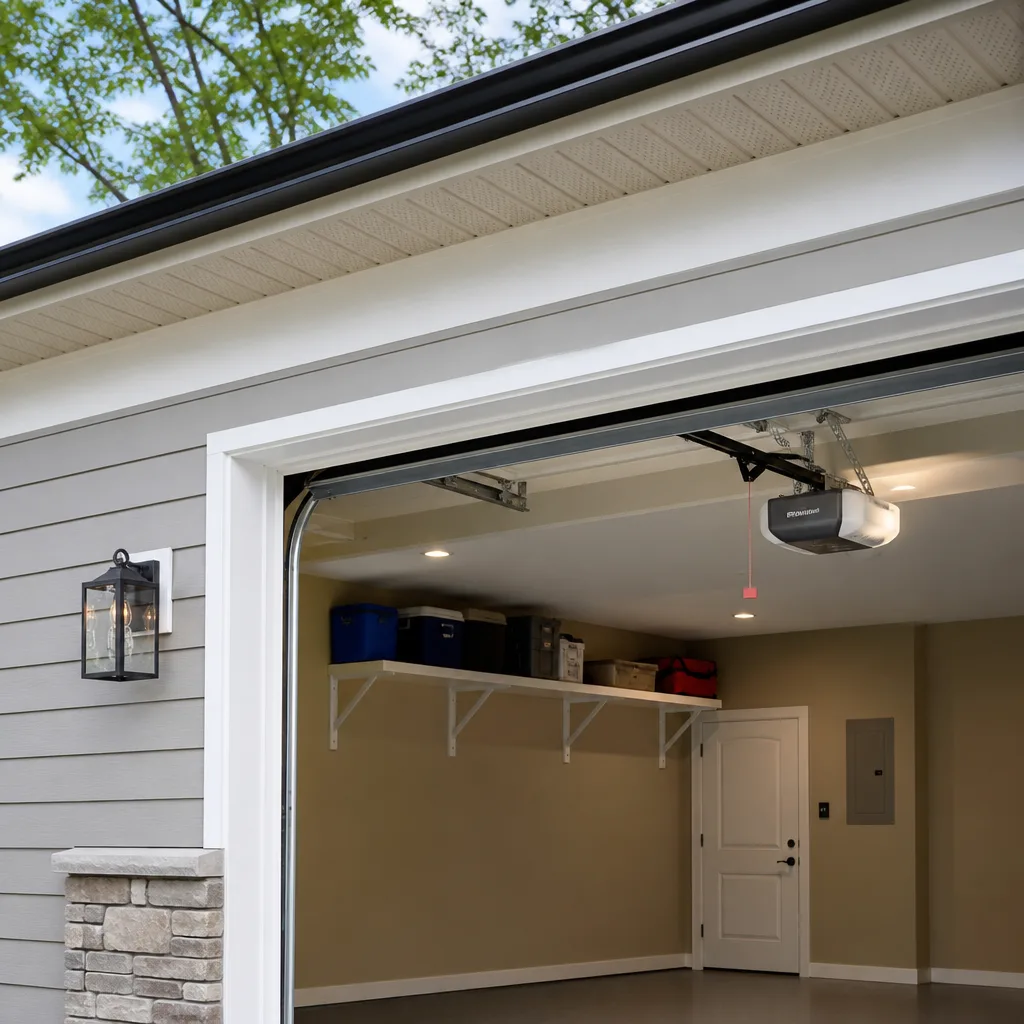 LiftMaster openers
 Chamberlain openers
Full 25-point door and opener safety check with every visit - springs, cables, rollers, tracks, and your LiftMaster or Chamberlain opener included
You get a price before we start. It does not change when the truck arrives.
Get your free estimateThe Complete Garage Door Repair Guide for Fort Lauderdale Homeowners
Most garage door guides are written for climates where rust takes years to develop. In Palm Aire and coastal Broward County, the same corrosion can appear on bottom brackets and torsion hardware within a single humid season. Salt air, hurricane-driven rain, and ten months of heat cycling don’t just shorten the life of your door; they change which components fail first and how those failures present. This guide explains what actually goes wrong on Fort Lauderdale garage doors, how to spot problems before they strand your car in the driveway, and when a repair is worth doing versus when replacement is the honest call. You’ll leave with a climate-specific framework that generic national guides simply don’t offer.
Quick Answer
Garage door repair in Fort Lauderdale typically costs between $125 and $450 for common fixes like spring replacement, cable repair, and sensor realignment, with opener-specific work running $95 to $280. Most repairs are same-day jobs when a technician already carries the parts, but the real variable is climate: salt-air corrosion and hurricane-season moisture accelerate wear on bottom brackets, cables, and spring anchor plates faster than inland markets. If your door is making grinding noises, hanging unevenly, or refusing to open after a storm, call (855) 382-3858 for a free estimate from a Fort Lauderdale specialist who works on your brand.
Styles & brands we work with
- Raised-panel steel
- Carriage house
- Modern flush
- Full-view glass
- LiftMaster openers
- Chamberlain openers
Table of Contents
- Why Fort Lauderdale’s Climate Changes What Breaks First
- The Climate-Adjusted Inspection Checklist for Fort Lauderdale Homeowners
- How to Prioritize Repairs: Safety Risk vs. Convenience
- Spring Failures: The Most Common Repair in Broward County
- Opener Problems Diagnosed at the Source
- Wind-Load Hardware: What Fort Lauderdale Doors Need
- Repair or Replace: We’ll Tell You Which One Actually Makes Sense
- Common Mistakes to Avoid
- When to Call a Professional
- Frequently Asked Questions
Why Fort Lauderdale’s Climate Changes What Breaks First
A garage door in Fort Lauderdale lives a harder life than the same door in Orlando or Atlanta. Three environmental factors work against it every day. Salt air from the Atlantic, humidity that hovers above 70% for most of the year, and the thermal expansion that comes from daily temperature swings between a hot garage and an air-conditioned interior.
In our experience working on doors across Fort Lauderdale, the failure pattern is consistent. Bottom brackets corrode first. These are the steel L-shaped plates that connect the bottom cable to the door itself, and they sit inches from a concrete floor that stays damp through most of the wet season. When a bottom bracket fails, the door can drop suddenly on one side; this is one of the most dangerous failures we see, and it happens more often in coastal Broward County than almost anywhere else in Florida.
Cables come next. A galvanized cable on a Fort Lauderdale door picks up salt deposits that act as a slow abrasive, especially where the cable wraps around the drum. The micro-fraying that starts there eventually becomes visible rust, and that rust means the cable’s rated strength has already degraded. Homeowners who inspect their doors regularly will notice the rust before it fails. Homeowners who don’t will hear a loud snap.
Spring anchor plates are the third component that fails earlier here. The anchor plate is the steel bracket that holds the torsion spring to the header above the door. Rust forms where the bracket meets the wall, and because that area is hidden behind the spring itself, most people never see it until the spring lets go and the bracket is visibly twisted. This is why Fort Lauderdale homeowners should treat spring and bracket inspection as a single check rather than two separate ones.
The Climate-Adjusted Inspection Checklist for Fort Lauderdale Homeowners
Most inspection checklists you’ll find online are written for garages in dry climates. They ignore the specific components that fail in Broward County and overemphasize things that rarely matter here. The following five-point checklist addresses what actually goes wrong on Fort Lauderdale doors, and it takes less than ten minutes.
- Check the bottom brackets for white or orange crusting. Look at the steel plates on both sides of the door, down by the floor. White powder is zinc corrosion; orange is active rust. Either one means the bracket is weakening. In Fort Lauderdale, brackets that show visible rust are typically 12 to 18 months from failure.
- Run your fingers along the exposed cable near the drum. You’re feeling for broken strands, which feel like tiny splinters. Don’t pull on the cable, and don’t touch it while the door is moving. If you feel any roughness, that cable needs replacement before it snaps under tension.
- Look at the torsion spring’s anchor brackets. Stand inside the garage and look above the door. The brackets that hold the spring to the wall should be clean steel. If you see rust streaks running down from them, the bracket is corroding. This is a safety issue because a failed bracket sends a loaded spring flying.
- Test the balance manually. Pull the emergency release cord and lift the door by hand. It should move smoothly and stay in place halfway open without drifting. A door that drops or rises on its own has either a spring problem or a track problem. Both get worse fast in humid weather.
- Check the weatherstripping along the bottom and sides. In Fort Lauderdale, failed seals mean more than drafts; they let humid air and salt particles into the garage, accelerating corrosion on every metal component. Replace cracked or flattened seals before the wet season starts.
Run this checklist after every hurricane season, even if your door was inspected before the storm. Wind-driven rain can force water into places that normal summer rain never reaches, and the corrosion it starts may not show up for another month or two.
How to Prioritize Repairs: Safety Risk vs. Convenience
Not every garage door problem needs a same-day dispatch. Some failures are dangerous and demand immediate attention. Others are inconveniences you can schedule around. Knowing which is which saves you money and keeps your family safe.
Safety-critical failures: call immediately. These are problems where a component under tension has already partially failed, or where the door could fall without warning. A snapped cable on one side means the door is now supported unevenly, and the remaining cable is carrying twice its rated load. A broken spring means the full weight of a 150 to 400 pound door is now unassisted; if the emergency release is pulled, that door will come down hard. Rusted-through bottom brackets fall into this category too. Any of these failures warrant a same-day call to a Fort Lauderdale garage door specialist, because the risk of injury from a falling door is significant.
Urgent but manageable: schedule within a week. A door that opens but grinds, or an opener that struggles and reverses, is telling you something is wrong. These problems will not typically cause a catastrophic failure, but they get more expensive the longer you ignore them. A $40 roller replacement is cheaper than a $200 track repair caused by a seized roller.
Convenience issues: plan at your leisure. A remote that only works from close range, a keypad with a worn-out button, or a door that’s noisy but balanced and functioning are all quality-of-life repairs. They matter, but they don’t require an emergency dispatch fee. Fort Lauderdale homeowners can schedule these for a regular service visit and combine several small fixes in one trip.
The distinction matters because it affects what you should expect from any repair company. A Fort Lauderdale garage door company that treats a broken spring and a finicky remote with the same urgency is not giving you honest guidance.
Spring Failures: The Most Common Repair in Broward County
Torsion springs are the workhorses of every garage door system, and they’re the component Fort Lauderdale homeowners replace most often. The average torsion spring is rated for 10,000 cycles, which translates to roughly 7 to 9 years of normal use. In Broward County’s humid environment, that lifespan trends toward the lower end because micro-corrosion on the spring’s surface creates stress points that accelerate fatigue.
Spring failure is almost always audible. Homeowners describe it as a gunshot or a firecracker going off in the garage. What actually happened is the spring snapped under tension and released its stored energy into the shaft and brackets. If you hear this sound, stop using the door immediately. Do not try to open it with the opener, and do not pull the emergency release to lift it by hand. A door with a broken spring is dead weight, and a person cannot safely lift or lower it alone.
Replacement springs must be matched to the door’s weight, height, and cable drum setup. This is not a situation where one size works for most doors. A spring with the wrong wire gauge or inside diameter will either be too weak to balance the door or too strong and strain the opener. On Fort Lauderdale doors, we also recommend springs with a corrosion-resistant coating, which adds meaningful lifespan in coastal air. Wayne Dalton and Clopay both offer factory spring options designed for high-humidity environments, and if your door is one of those brands, matching the spring to the manufacturer’s specification matters for long-term performance.
Spring replacement on a Fort Lauderdale garage door typically costs between $180 and $340, including the spring and installation labor. The price varies based on whether you have a single spring or a dual-spring system, the spring’s cycle rating, and whether the technician needs to replace corroded anchor brackets at the same time. We always quote the full price before starting any work, so you know the number before we touch the door.
One more safety note worth repeating: torsion springs are under hundreds of pounds of torque. Working on them without the proper winding bars and training is genuinely dangerous. This is one repair where even a very capable DIY homeowner should call a professional.
Opener Problems Diagnosed at the Source
Garage door openers are the component homeowners find most confusing, and most opener problems in Fort Lauderdale are misdiagnosed because people assume the opener is the problem when it isn’t. The opener is a motor attached to a drive system. If the door itself is unbalanced or binding, the opener will struggle, reverse, or burn out. Treating the opener without checking the door is like replacing your car’s transmission because the brakes are dragging.
That said, opener-specific failures do happen. The most common ones we see in Broward County fall into a few clear categories. Logic board failures from power surges, which are frequent during afternoon thunderstorms. Gear wear on older chain-drive models, especially Chamberlain and Craftsman units that have been in service for a decade or more. Sensor misalignment, which is usually a physical issue (the sensor got bumped) rather than an electronic one. And remote range problems, which in older homes can be caused by LED bulbs interfering with the radio signal.
When we diagnose an opener, the process follows a specific sequence. First, disconnect the opener and test the door by hand. If the door is heavy or binding, the door is the problem and the opener is probably fine. If the door moves easily, the issue is in the opener itself. From there, we work through the power supply, the safety sensors, the logic board, and the drive mechanism, in that order. Problems are diagnosed at their source rather than patched, because a patched opener fails again in months, and the second failure is always worse.
Fort Lauderdale homeowners with smart openers should also be aware that humidity affects electronics. Condensation inside the opener housing is common in non-climate-controlled garages near the coast, and it can short out logic boards over time. If your opener is mounted in a garage that gets visibly damp during the wet season, periodic inspection of the internal connections is worth doing.
Wind-Load Hardware: What Fort Lauderdale Doors Need
Fort Lauderdale sits squarely in Florida’s High Velocity Hurricane Zone, and that means garage doors here are subject to wind-load requirements that inland doors are not. A wind-load rated door is engineered to resist the positive and negative pressures generated by hurricane-force winds, and it uses reinforced hardware at every connection point: heavier hinges, thicker tracks, stronger struts, and brackets designed to transfer load into the wall.
If your home was built after Florida’s 2002 building code took effect, your garage door is almost certainly wind-load rated. You can verify this by looking for a label on the door itself, usually on one of the end stiles or on the inside panel near the top. The label will state the design pressure rating, expressed as a number like DP 50 or DP 60. Higher numbers mean higher wind resistance.
If your home predates the code, or if the door has been replaced at some point with a non-rated model, you have a retrofit decision to make. Retrofitting an older door to meet current wind-load standards is possible on many Amarr and Clopay doors, but it requires replacing the track, hinges, and struts, not just adding a brace. A full retrofit on a double door typically costs more than many homeowners expect, and there are cases where replacing the entire door with a new wind-rated model is actually the better financial decision. We walk through those numbers honestly, and we’ll tell you when repair no longer makes sense.
One thing to understand: wind-load rating is about the door’s structure, not the opener. A wind-rated door with a standard opener is still reasonably protected during a storm, because the door itself is doing the work of holding back wind pressure. What you don’t want is a non-rated door that you’ve been patching together for years, because in a strong storm, the door is the weak point in the garage wall, and a failed garage door can lead to roof damage from sudden pressurization.
Repair or Replace: We’ll Tell You Which One Actually Makes Sense
Every Fort Lauderdale homeowner with an aging garage door eventually asks the same question: should I keep repairing this door or replace it? The answer depends on three factors, and none of them are emotional.
First, the structural condition of the door panels. If the panels themselves are rusting through, delaminating, or showing signs of water intrusion, repairs are buying time, not solving problems. A steel door in Fort Lauderdale that’s been exposed to salt air for 15 years will eventually rust at the bottom edges, and once that rust works its way between the panel skins, the panel loses structural integrity. Replacing individual panels on most modern doors is possible, but on older doors the panels often aren’t available anymore.
Second, the cumulative cost of repairs. A good rule of thumb: if you’ve spent more than half the cost of a new door on repairs in the last five years, replacement is the better financial move. We see Fort Lauderdale homeowners pour money into door after door, replacing springs, cables, rollers, and brackets piecemeal, when a new door with new hardware would have cost less than the sum of those repairs. We’ll tell you when you’ve reached that point, because honest recommendations are worth more than another service call.
Third, the wind-load question. If your door isn’t rated for Broward County’s wind requirements and it’s also aging out on other fronts, replacement kills two problems with one decision. A new door from Clopay, Amarr, or Wayne Dalton can be ordered with wind-load certification, corrosion-resistant hardware, and a warranty; that’s not something you can retrofit onto a door that’s already 20 years old.
When repair does make sense, we’ll tell you that too. A door that’s structurally sound, wind-rated, and under 12 years old is usually worth repairing. Springs, cables, rollers, and brackets are all wear items that are supposed to be replaced periodically. Fixing them is normal maintenance, not throwing money away.
Common Mistakes to Avoid
- Ignoring rust on the bottom brackets. In Fort Lauderdale, a rusted bottom bracket is a countdown, not an aesthetic issue. The bracket holds the cable that keeps your door from falling, and a failed bracket can drop a 300-pound door onto your car or a person. If you see rust, replace the bracket now, not next spring.
- Continuing to use a door with a broken spring. The opener was never designed to lift a door without spring assistance. Running it on a broken spring strains the opener’s gears, burns out motors, and gets more expensive by the day. Stop using the door and call for a repair.
- Replacing an opener when the door is the actual problem. A struggling opener is often a symptom of an unbalanced or binding door. Replacing the opener without fixing the door wastes money and still leaves you with a broken system. A proper diagnosis checks the door first.
- Waiting until after hurricane season to inspect the door. Most Fort Lauderdale homeowners inspect their garage doors after a storm has already passed. The smart move is inspecting before the season starts, when there’s still time to replace corroded hardware and reinforce weak points.
- Using generic replacement parts on a brand-specific door. A Clopay door with Wayne Dalton springs will work, but it won’t work the way the manufacturer designed it to. Brand-matched parts fit better, last longer, and preserve any remaining warranty. Ask your technician which parts they’re using and why.
- Assuming a wind-rated door doesn’t need maintenance. Wind-load rating describes what the door can withstand, not that it’s maintenance-free. The springs, cables, and brackets on a wind-rated door are subject to the same corrosion as everything else in coastal Broward County.
- DIY-ing a torsion spring replacement. Torsion springs hold enough stored energy to cause serious injury or death if mishandled. This is not a repair to learn from a YouTube video, and the tools required are not in a typical homeowner’s toolbox.
When to Call a Professional
Some garage door repairs are genuinely DIY-appropriate: replacing weatherstripping, swapping out a remote battery, and cleaning the tracks. Others should never be touched without training. If your door has a broken torsion spring, a snapped cable, rusted-through brackets, or any problem involving the high-tension hardware, call a professional. The risk of a falling door causing serious injury is not theoretical; it happens every year in homes across Florida.
If your opener is making grinding sounds, reversing unexpectedly, or failing to respond, a specialist can diagnose the source quickly and honestly. Fort Lauderdale Garage Door Repair offers free estimates in Fort Lauderdale, and we’re certified to work on eight leading brands including LiftMaster, Chamberlain, Genie, Clopay, Amarr, Wayne Dalton, Craftsman, and Raynor. Call (855) 382-3858 and we’ll tell you what’s wrong, what it costs, and whether repair or replacement makes more sense. You can also visit our Fort Lauderdale Garage Door Repair home page for more details.
Frequently Asked Questions
Our Garage Door Repair services in Fort Lauderdale typically cost $125 to $450 depending on the component. Spring replacement runs $180 to $340, cable replacement $125 to $225, and sensor or opener repairs $95 to $280. Climate-related corrosion on bottom brackets and cables sometimes adds to the total. Call (855) 382-3858 for an exact quote, and we’ll give you a firm price before any work starts.
Most spring replacements are same-day repairs when the technician carries the right spring on the truck. We stock springs for the common door weights and brands used in Broward County, and we match the replacement spring to your door’s specific weight and cycle rating. If you’re dealing with a broken spring, call (855) 382-3858 and we’ll get a technician out today.
We work on openers from LiftMaster, Chamberlain, Genie, Clopay, Amarr, Wayne Dalton, Craftsman, and Raynor. Opener diagnosis is one of our specialties, because most opener problems in Fort Lauderdale are misdiagnosed when the actual issue is with the door or the safety sensors. One call covers it, regardless of which opener is mounted on your garage ceiling.
Salt air accelerates corrosion on bottom brackets, cables, spring anchor plates, and track hardware. In coastal Broward County, we see rust on these components within a single humid season, which shortens their life compared to inland garages. Homeowners near the water should inspect their hardware every six months and after each hurricane season, as covered in The Complete Guide to Garage Doors in Fort Lauderdale. Working on your existing brand’s hardware, whether it’s a Clopay or Amarr door, we can advise you on corrosion-resistant replacement options.
Yes, most repairs are same-day when they involve springs, cables, or opener failures that we diagnose as safety-critical. For non-urgent repairs or installations, we’ll schedule a time that works for you. Same-day repair is about getting a safety issue resolved quickly. For new door installations or wind-load retrofits, we’ll do a free measure and provide a written price before scheduling the job. See DIY vs Professional Garage Door: The Fort Lauderdale Homeowner’s Decision Guide to help decide if you need us.
No. We quote the full repair or installation price before any work begins, and we don’t add surprise charges after the fact. The quoted number is the number you pay. Call (855) 382-3858 for a free estimate and we’ll tell you exactly what the repair costs before we touch the door.
The Bottom Line
Your garage door is a mechanical system, and in Fort Lauderdale it’s a system that wears faster than the national averages would suggest. Salt air, humidity, and storm-driven rain put extra stress on the components that hold your door up, and the failures tend to happen suddenly. Regular inspection catches problems early. Honest repair-or-replace guidance saves you money. And when a spring snaps or a cable lets go, you want a specialist who understands Broward County doors, not a generalist who’s learning on the job. One call covers it; our team is built around garage doors, nothing else. Call Fort Lauderdale Garage Door Repair at (855) 382-3858 for a free estimate, or use our Garage Door Repair in Palm Aire page to learn more about service in your neighborhood. If you need opener diagnostics, see our Garage Door Opener Repair in Palm Aire page. And if replacement turns out to be the right call, our Garage Door Installation in Palm Aire page walks through what to expect.
Written by the team at Fort Lauderdale Garage Door Repair, serving Fort Lauderdale since 2018. Browse more guides & resources on our blog.
See the difference
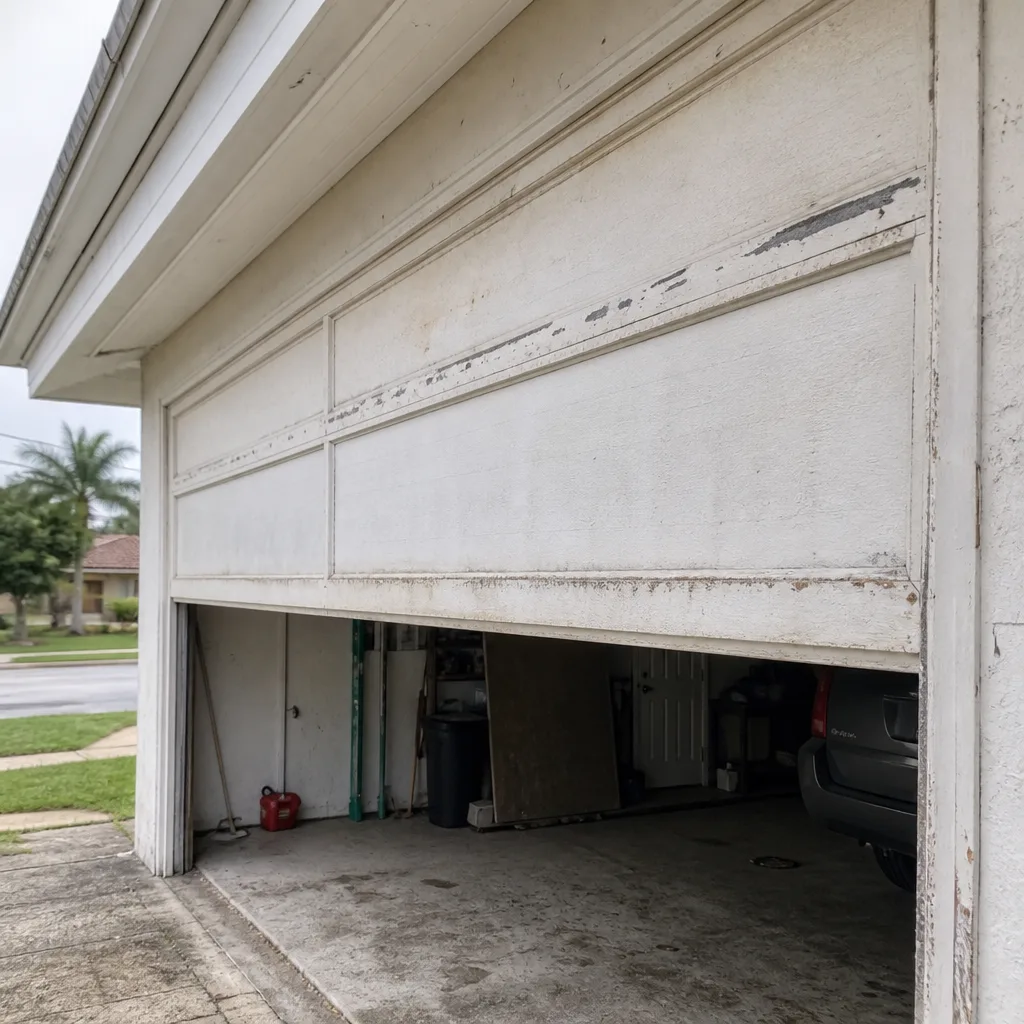 Before
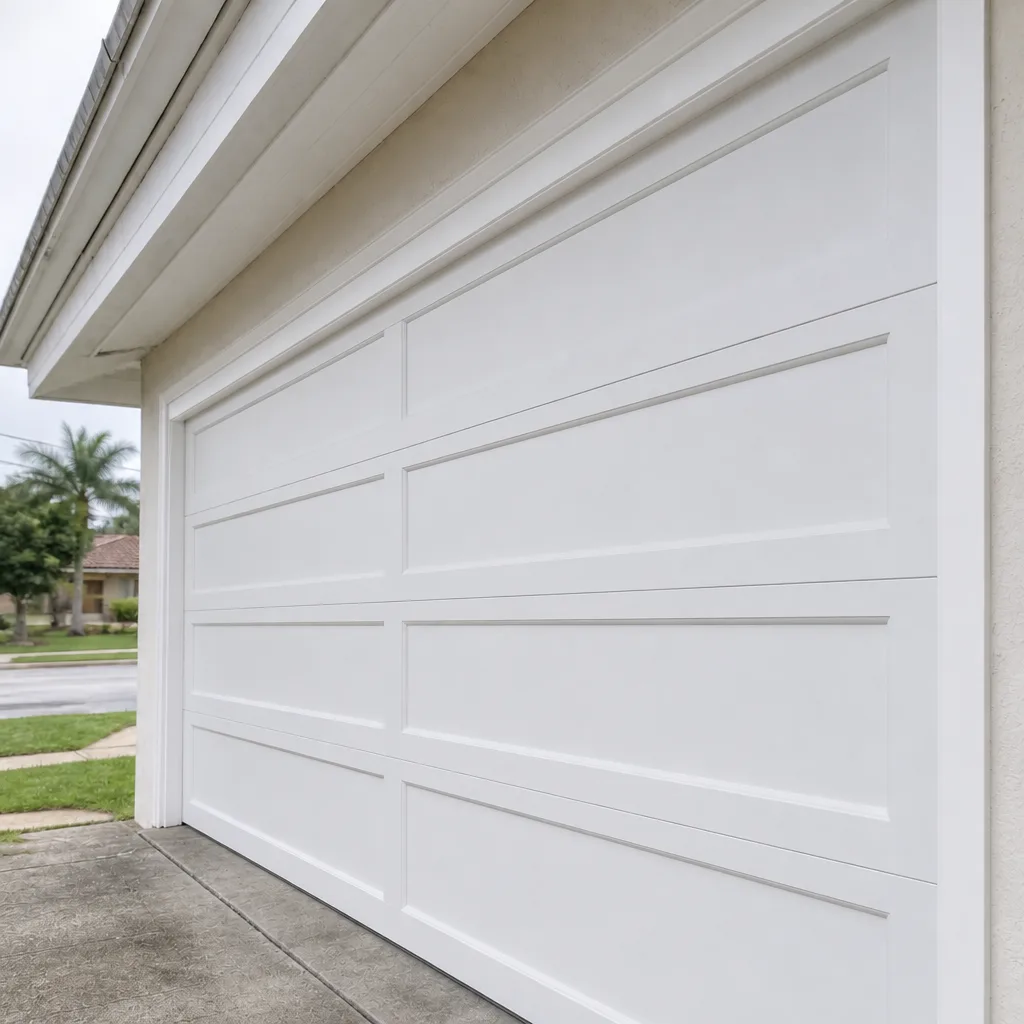 After
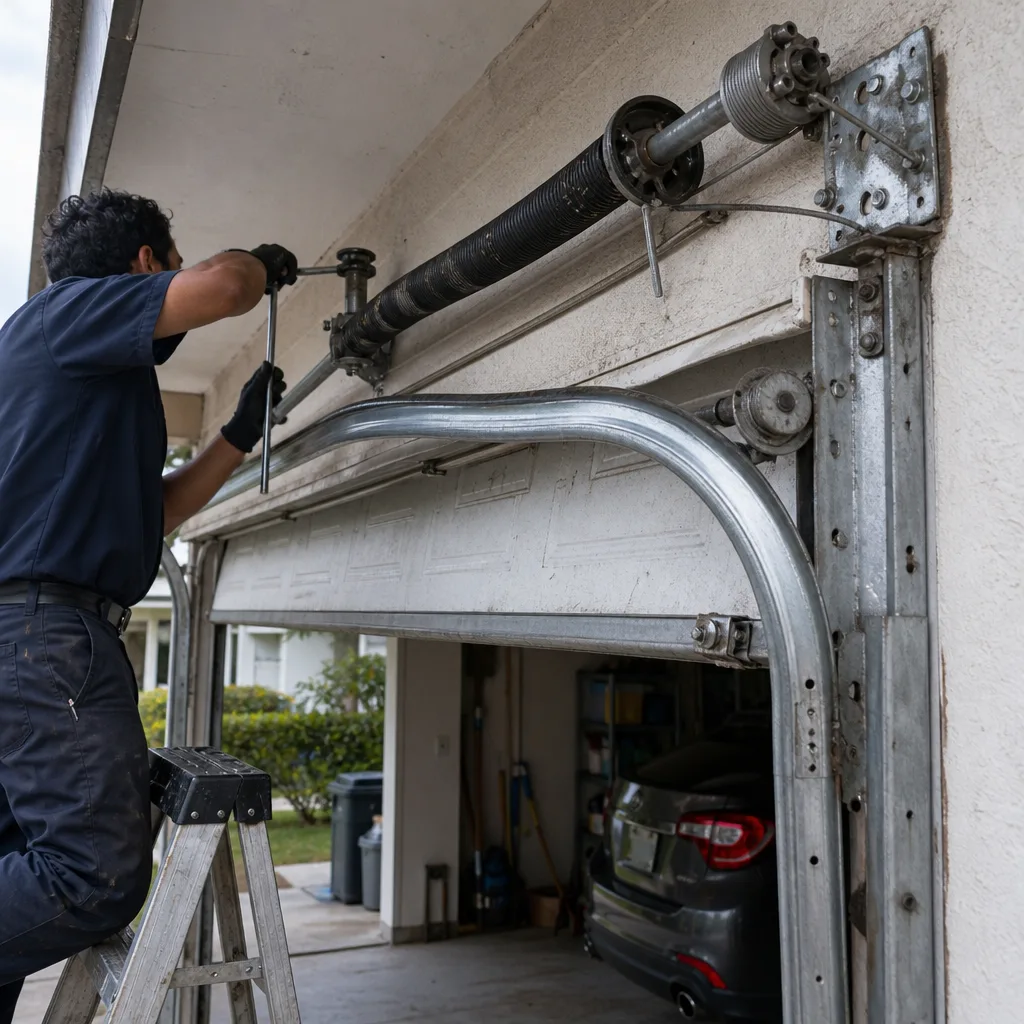 Before
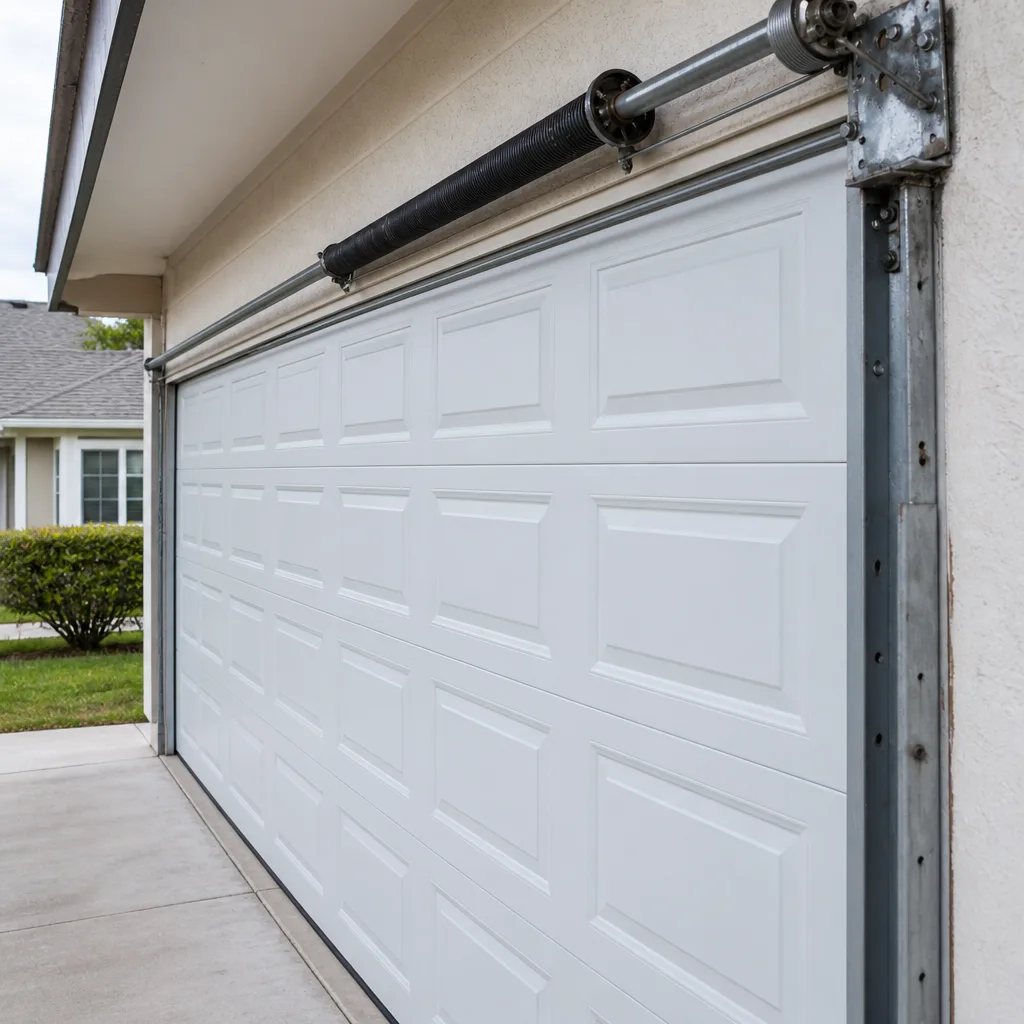 After
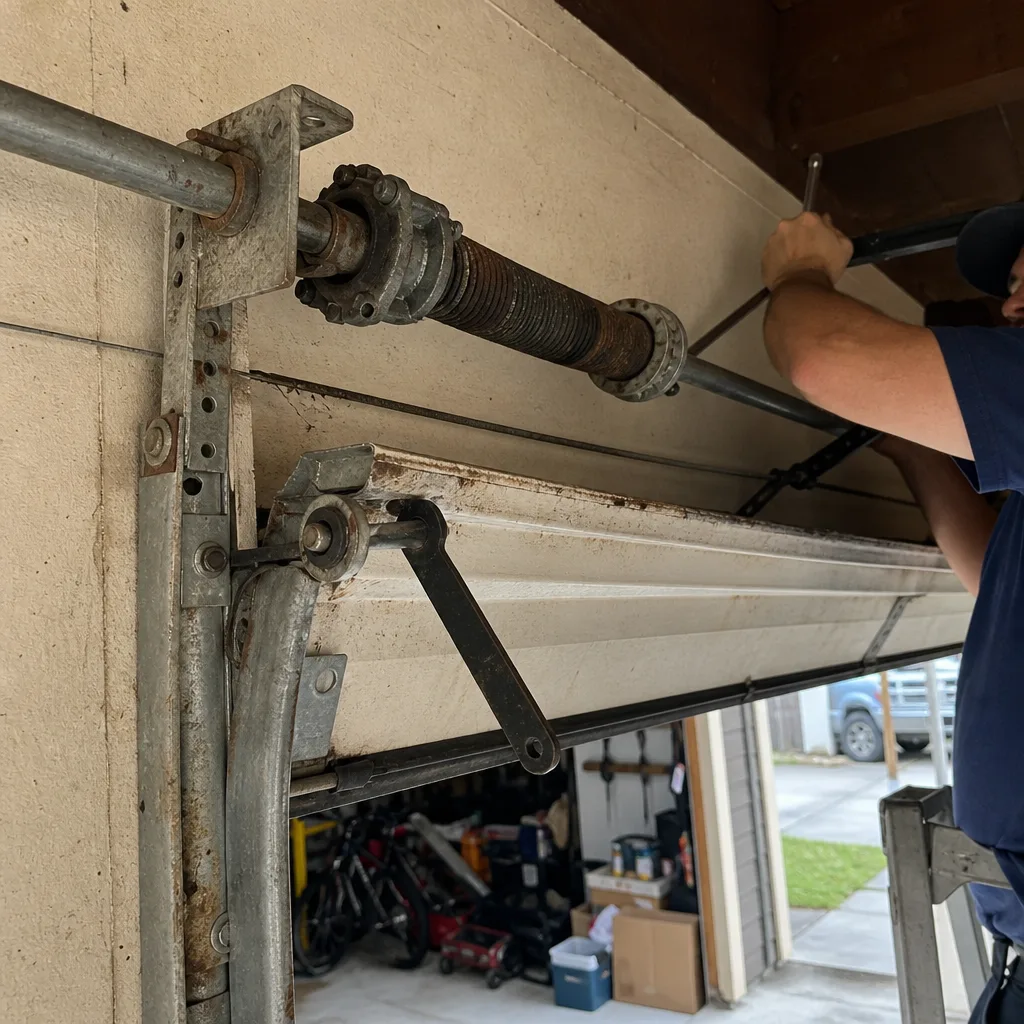 Before
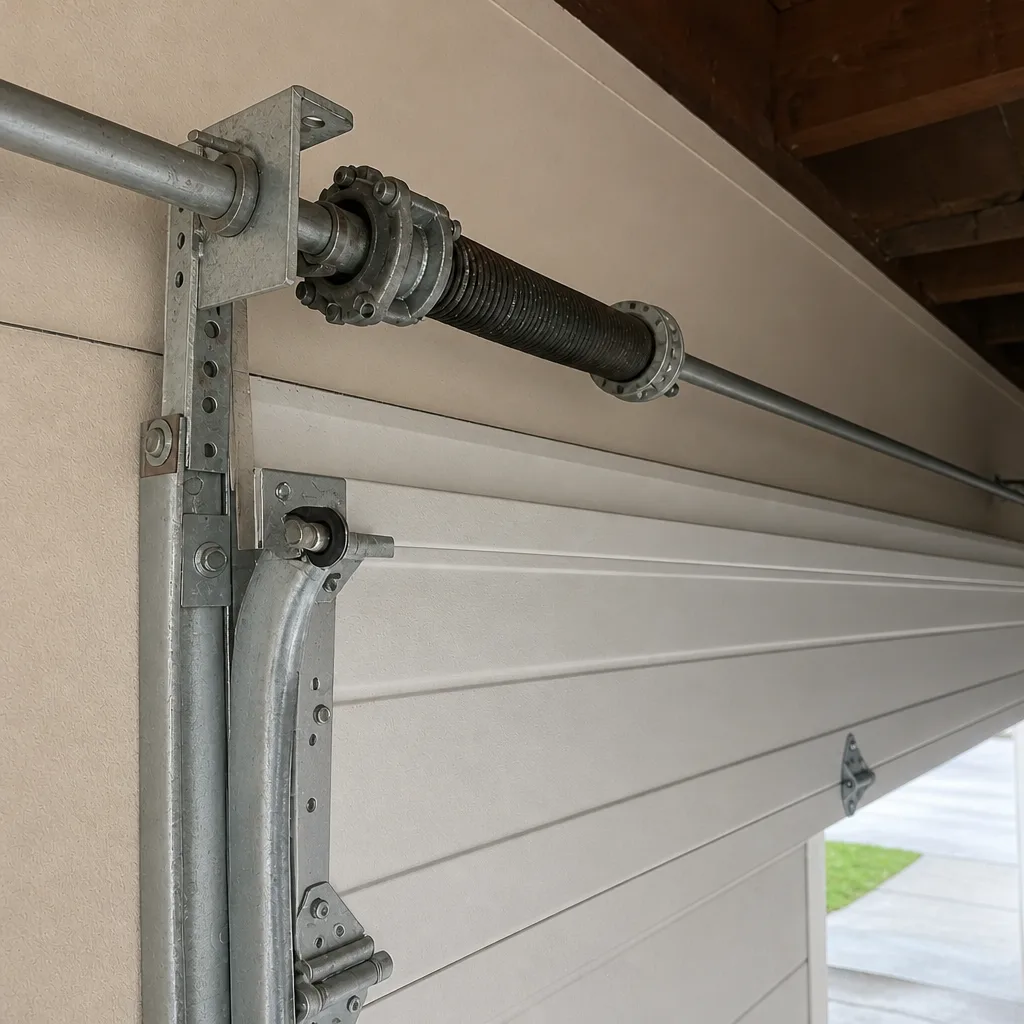 After