
Last updated October 31, 2026
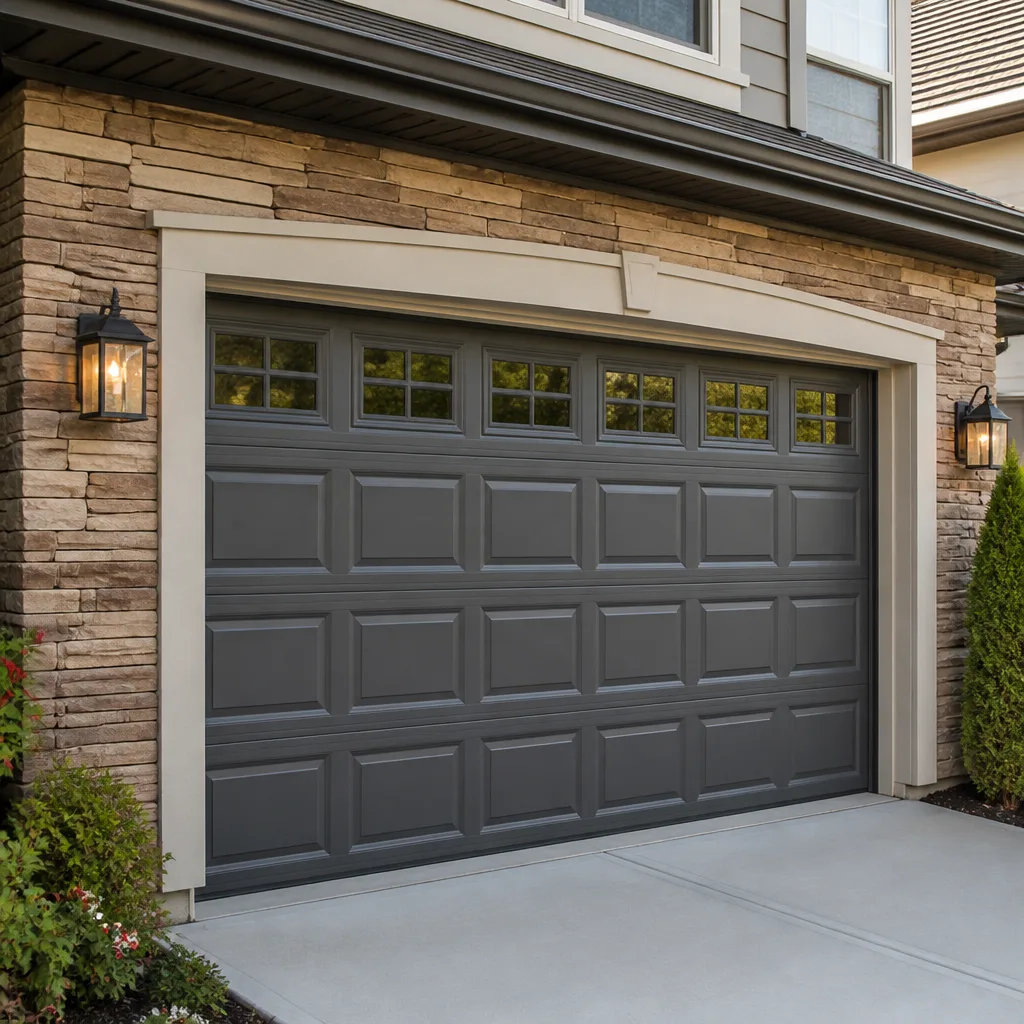 Raised-panel steel
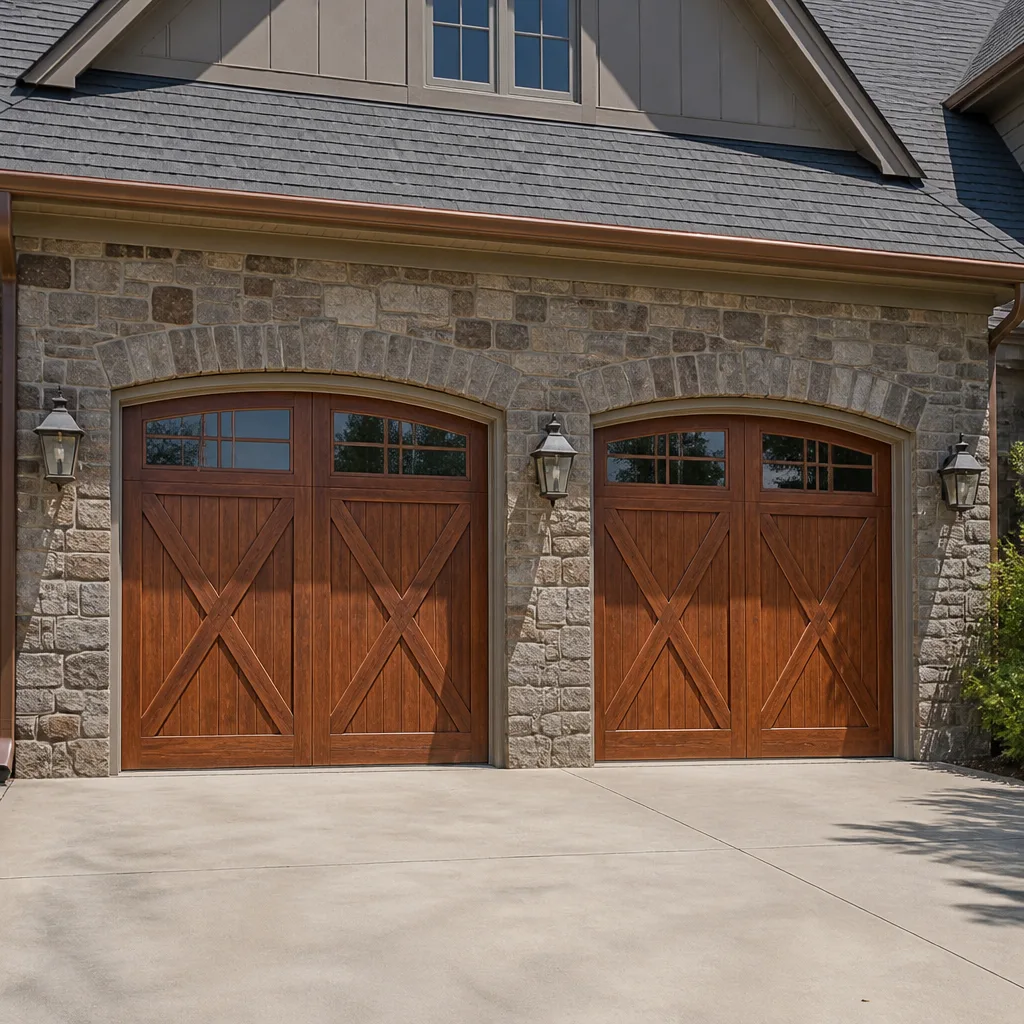 Carriage house
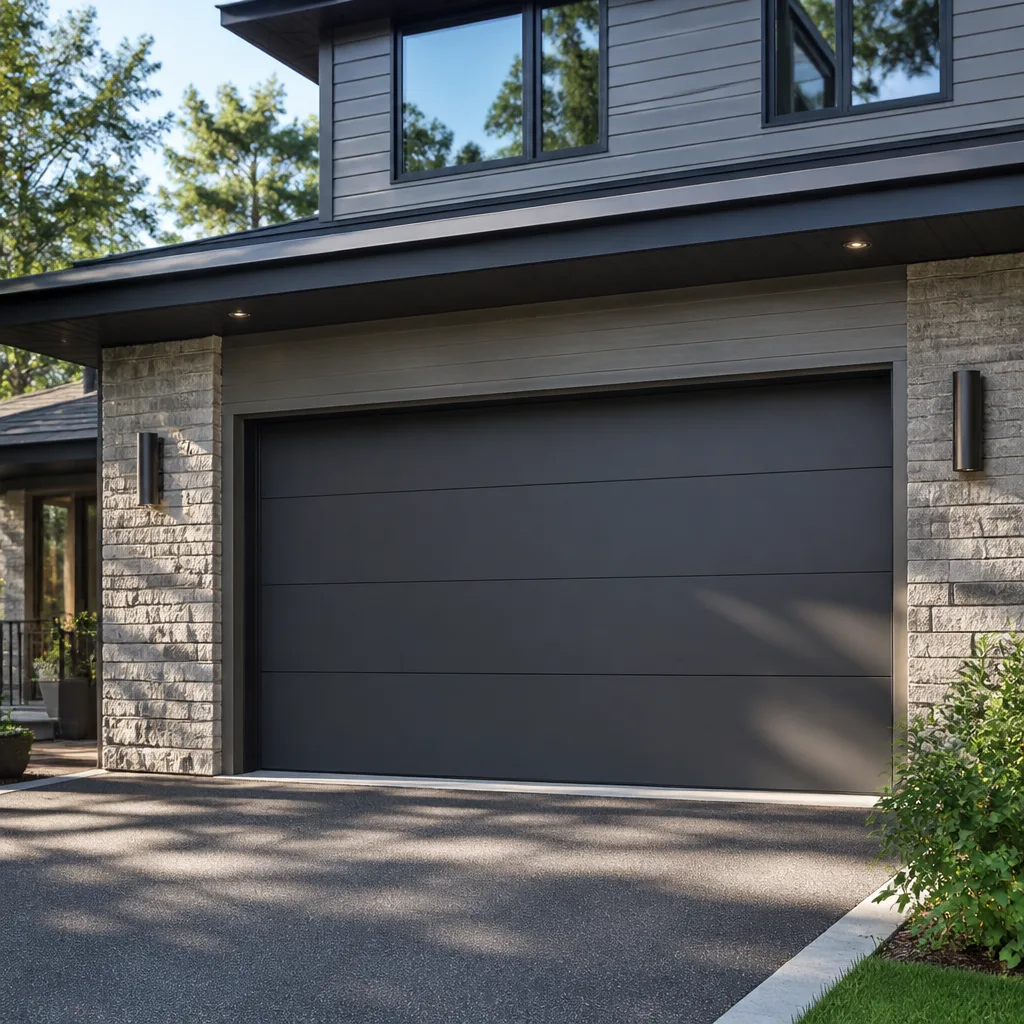 Modern flush
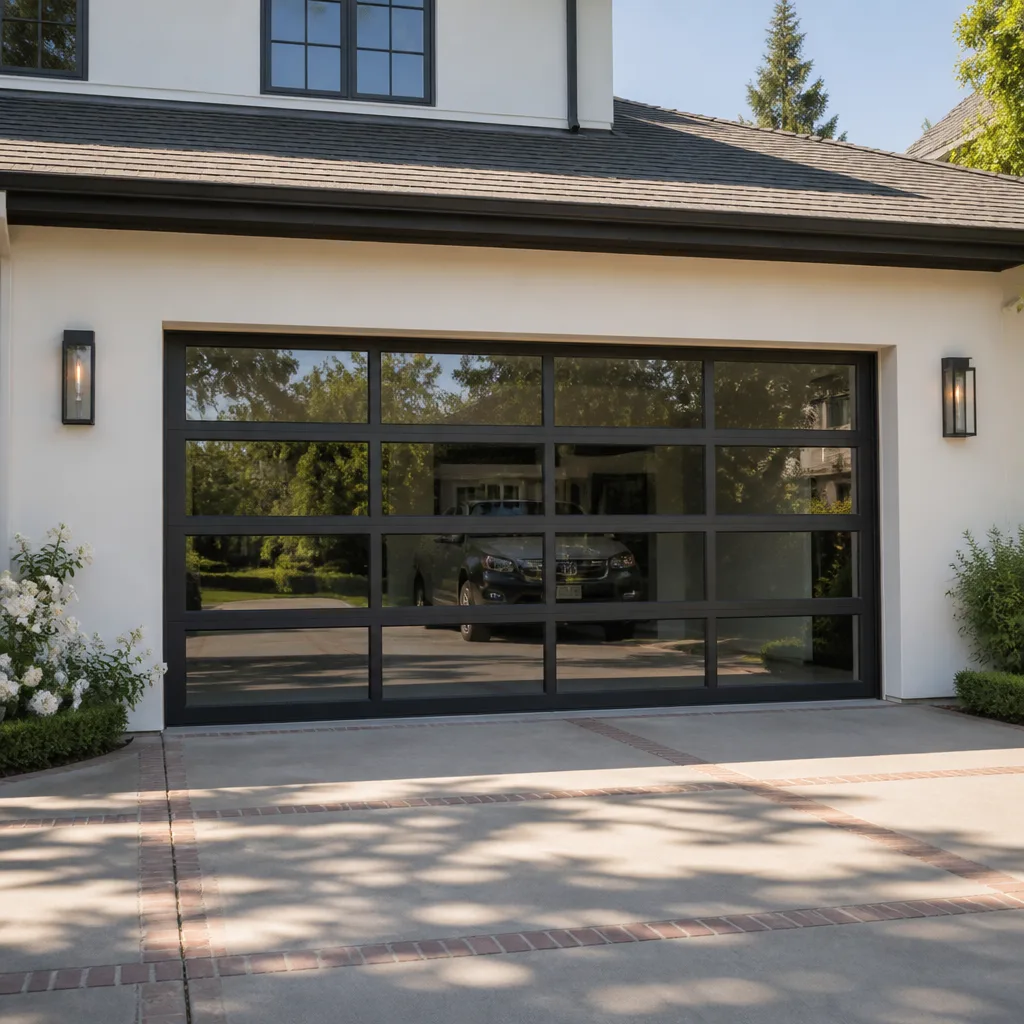 Full-view glass
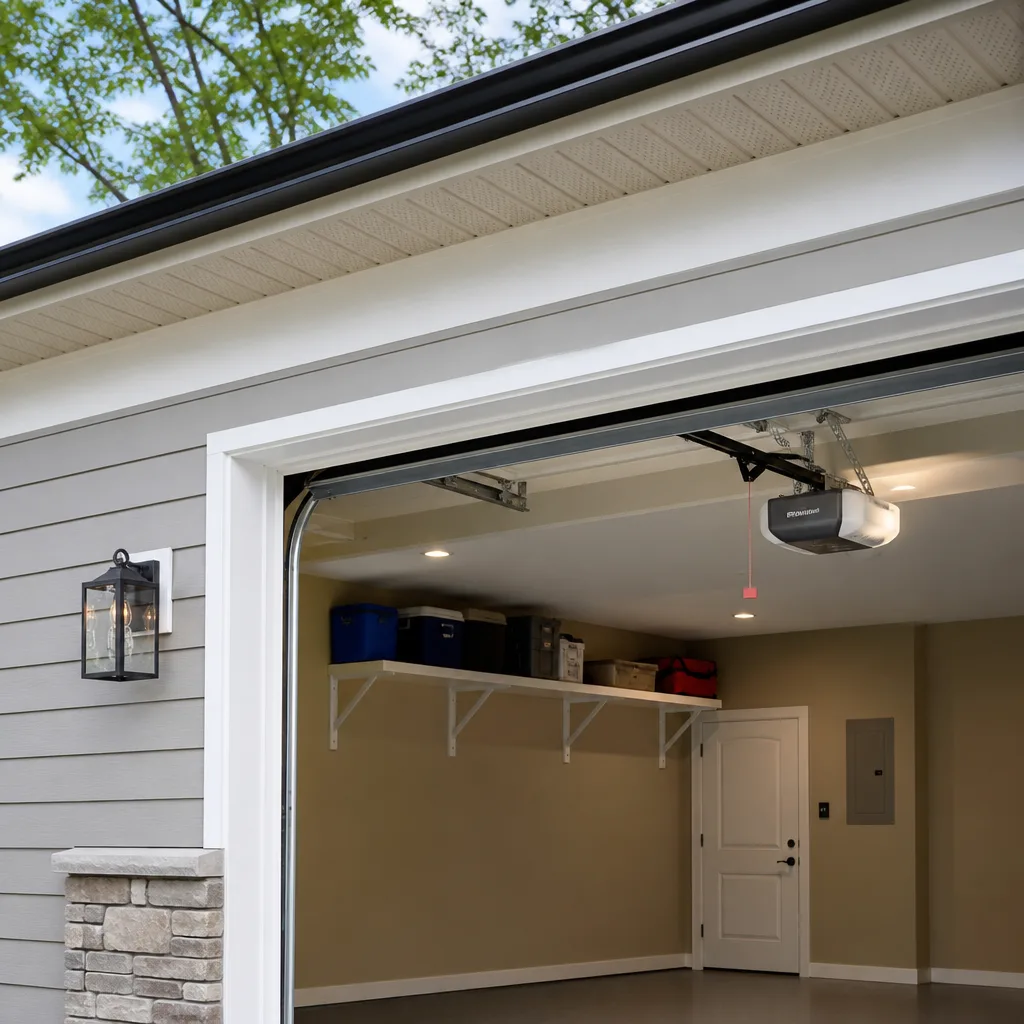 LiftMaster openers
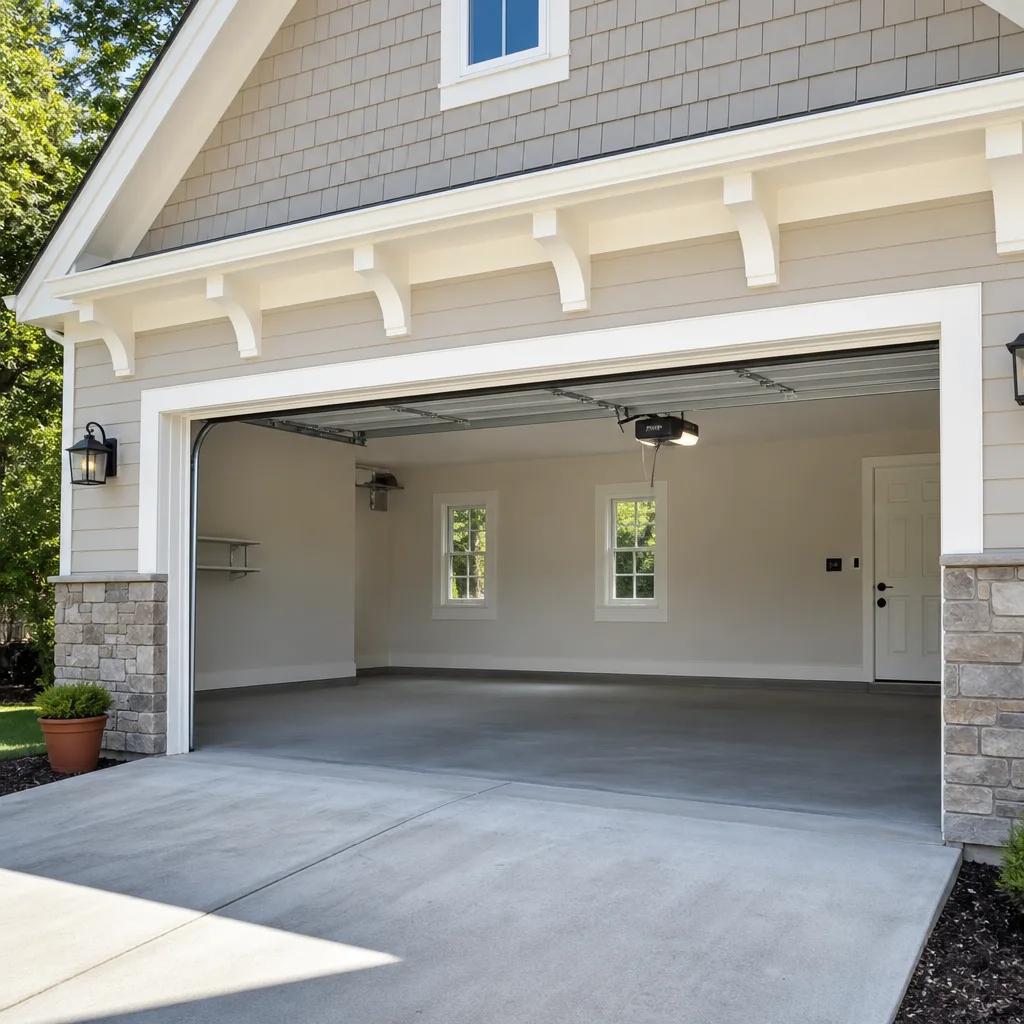 Chamberlain openers
Full 25-point door and opener safety check with every visit - springs, cables, rollers, tracks, and your LiftMaster or Chamberlain opener included
You get a price before we start. It does not change when the truck arrives.
Get your free estimateDIY vs Professional Garage Door: The Fort Lauderdale Homeowner’s Decision Guide
Garage door torsion springs send roughly 1,600 Americans to the emergency room every year, according to Consumer Product Safety Commission tracking. But here’s what most guides won’t tell you: lubricating your tracks, realigning a photo eye sensor, or reprogramming a LiftMaster keypad sends approximately zero people to the ER. The problem isn’t that homeowners lack skill. It’s that generic advice columns lump every garage door task into one scary bucket, or worse, one breezy DIY bucket. In Fort Lauderdale, where salt air corrodes hardware and hurricane codes govern what can legally hang over your car, the line between sensible DIY and genuine liability is sharper than anywhere else in Florida. This guide draws that line precisely.
Quick Answer
Most garage door maintenance in Fort Lauderdale is safe to DIY: lubrication, sensor alignment, keypad programming, weatherstripping, and visual inspections. Anything involving torsion springs, lift cables, track brackets under tension, or full door installation should stay with a licensed professional, both for safety and because Broward County code enforcement requires permitted, wind-rated work that DIY installation rarely satisfies. The honest split is about 70% DIY-friendly, 30% professional-only.
Styles & brands we work with
- Raised-panel steel
- Carriage house
- Modern flush
- Full-view glass
- LiftMaster openers
- Chamberlain openers
Table of Contents
- The Real Question Isn’t Skill: It’s Risk and Liability
- The Task-by-Task Matrix: What You Can Do, What You Shouldn’t
- Florida’s Legal Dimension: Permits, Wind Ratings, and Why DIY Installation Fails
- The True Cost of DIY Failure: What Actually Happens When It Goes Wrong
- Opener Programming: The Legitimate DIY Sweet Spot
- How to Assess Your Door’s Complexity Before Touching Anything
- What You’ll Actually Need: A Realistic Tool and Parts List
- Fort Lauderdale-Specific Factors That Change the Equation
The Real Question Isn’t Skill: It’s Risk and Liability
You can watch a YouTube video and replace a torsion spring. People do it every weekend. The question is whether you should, and in Fort Lauderdale, that answer depends on two things most guides ignore. First, physical risk: a torsion spring under full tension stores enough energy to break bones, sever fingers, or worse if the winding bar slips. Second, legal risk: Broward County requires permits for garage door replacement, and the door must meet Miami-Dade County wind load standards, among the strictest in the nation. Do the work yourself, sell the house later, and an inspector flags an unpermitted, non-compliant door, and suddenly your weekend project becomes a title problem.
This guide uses a simple framework. Every task gets classified as Green (safe DIY), Yellow (DIY possible with research and care), or Red (professional-only, no exceptions). The classification isn’t about your confidence. It’s about what happens when something goes wrong. A misaligned sensor just means the door won’t close. A spring that lets go mid-repair means a hospital trip or a hole in your drywall. A door that fails wind inspection means a failed sale or an insurance denial after the next storm.
That’s the line. Not “can you” but “what’s the downside if you can’t.” If you’d like a professional opinion before attempting anything on this list, our team at Fort Lauderdale Garage Door Repair home walks homeowners through assessments by phone every day.
The Task-by-Task Matrix: What You Can Do, What You Shouldn’t
A real decision guide needs a real decision table. Here’s the breakdown of every common garage door task, classified with the reasoning behind each classification.
Green: Safe DIY for Any Fort Lauderdale Homeowner
- Track and roller lubrication: White lithium grease on the track interior, light oil on rollers. Takes 15 minutes, no risk. Needs doing every 6 months in coastal salt air, so learning this saves real money.
- Photo eye sensor realignment: If the door reverses before closing or the lights blink, the sensors are likely misaligned. Loosen the wing nut, adjust until both lights are solid, tighten. No spring tension involved.
- Keypad and remote reprogramming: For LiftMaster, Chamberlain, and Genie systems, the learn button on the motor unit plus the printed manual is all you need. This is documented, safe, and fully warrantied by the manufacturer.
- Bottom weatherstrip replacement: Slide out the old rubber, slide in the new. If you can measure the door width and cut rubber with scissors, you can do this. Critically important in Fort Lauderdale, where water intrusion through a failed seal is the leading cause of rusted bottom panels.
- Visual inspection: Monthly checks of cables, spring coils, roller wear, and bracket tightness. Catching a fraying cable before it snaps is the single highest-value DIY habit a homeowner can build.
Yellow: DIY Possible with Research and Caution
- Extension spring replacement (older doors only): If your door uses extension springs, which run perpendicular to the door on both sides, and you have the safety cable already installed, replacement is doable with a friend and the right tools. Most Fort Lauderdale homes built before 1990 have extension springs. Hint: if you see a spring on both sides of the door, you’re in this category.
- Hinge and roller replacement on the bottom panel: The bottom roller bracket is under tension from the cable. The middle and top hinges are not. Replace those freely. Call a pro for the bottom one.
- Opener logic board replacement: Plug-and-play on most Chamberlain and Genie models made after 2015. Unplug the unit, unscrew the board, screw in the new one. No spring work involved. We’ve walked plenty of homeowners through this over the phone.
Red: Professional-Only, No Exceptions
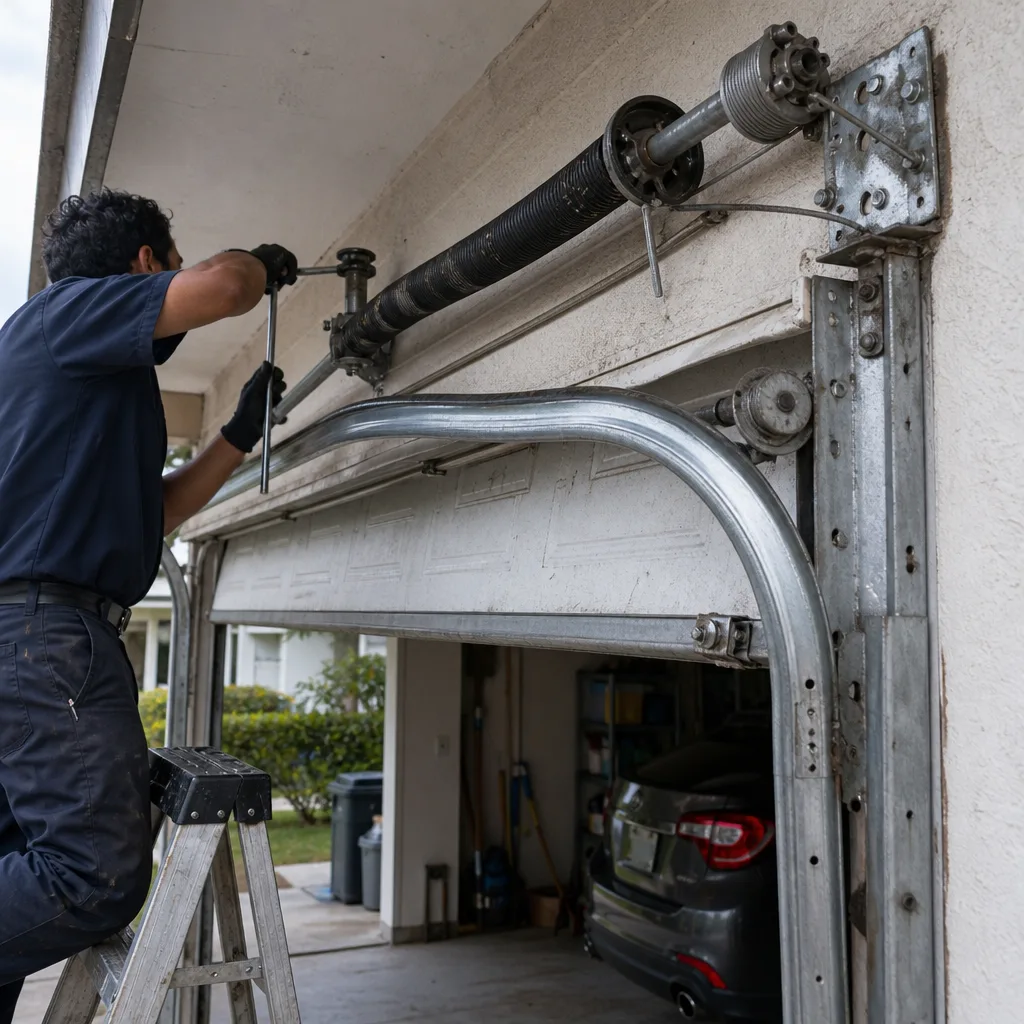
- Torsion spring replacement: The spring above the door that handles all the lifting weight. This is the ER statistic. The spring holds enough kinetic energy to shatter a jaw if the winding bar kicks back. Never attempt this without the specific winding bars, never use screwdrivers as a substitute, and never assume YouTube is a substitute for training.
- Lift cable replacement: The cables attached to the bottom brackets carry the full weight of a 150 to 400 pound door. If one breaks while you’re under the door, the door falls. If you’re replacing a cable, you’re working next to the torsion system, which means you’re in the blast radius.
- Track realignment or replacement: Tracks are bolted to the wall under load. Removing a track bolt on a door under any tension shifts that load unpredictably. A door that comes off its track mid-repair can pin someone against the wall.
- Full door or panel installation: Beyond the weight, beyond the tension, there’s the permit. See the next section.
We’ve seen every one of these go wrong in Fort Lauderdale garages from Victoria Park to Coral Ridge. The common factor in Red-task injuries is never lack of intelligence. It’s underestimating stored energy. Our Garage Door Repair in Palm Aire page covers what professional repair actually involves, step by step, so you know what you’re paying for if you decide not to DIY.
Florida’s Legal Dimension: Permits, Wind Ratings, and Why DIY Installation Fails
Here’s what most DIY garage door articles miss entirely: in Florida, replacing a garage door is construction, not maintenance. Chapter 1 of the Florida Building Code treats garage door replacement as a structural modification, and Broward County enforces it. That means a permit. That means an inspection. That means the door must meet the High Velocity Hurricane Zone (HVHZ) standards written for Miami-Dade and Broward counties, all of which we cover in our guide to Garage Door Permits, Codes & Inspections in Fort Lauderdale, FL: What You Need to Know.
Those standards are not a formality. A Fort Lauderdale garage door must withstand sustained winds of 130 mph or more depending on the home’s wind zone, and the framing, track reinforcement, and anchoring all get inspected. A homeowner who installs a standard non-wind-rated door, or a wind-rated door with incorrect anchoring, will fail inspection. Then they have an unpermitted door that violates Florida Building Code, and their homeowners insurance carrier can deny a future wind claim because of a non-compliant modification. That’s not a worst-case hypothetical. After Hurricane Irma in 2017, Broward County saw a wave of insurance denials on homes with unpermitted garage door replacements.
The permit process itself is not complicated. A licensed contractor files the permit, schedules the inspection, and handles the correction if the inspector flags something. Homeowners can file their own permits in Broward County if the work is for their own residence, but the inspection standard is the same, and DIY anchoring typically does not pass. The inspector checks for specific anchor bolt patterns, jamb reinforcement, and track gauge requirements that are not intuitive, even to experienced DIYers.
The practical upshot: DIY replacement of a garage door in Fort Lauderdale is rarely legal, and when it is legal, it rarely passes. This is the single clearest Red-task in the guide. A new door is an asset to the property, but only if it’s permitted and inspected. We handle the full installation arc, from permit filing to final inspection, as part of our standard garage door installation service.
The True Cost of DIY Failure: What Actually Happens When It Goes Wrong
Let’s put numbers on the downside. Not to scare you, but because an honest decision requires knowing what a failed attempt costs to fix.
Scenario 1: A torsion spring breaks mid-repair. You’re winding the new spring, the cone slips off the winding bar, and the spring unwinds violently. Best case, you lose the spring, which costs $90 to $180 for the part. Realistic case, the bar kicks into the drywall, takes a chunk out of the ceiling, and you spend a weekend patching. Worst case, you’re in the ER. The spring itself is not the expensive part. The consequence is.
Scenario 2: An improperly balanced door runs for six months. You replaced one spring instead of both, or you guessed at the winding count. The door now opens unevenly, the opener motor works harder on every cycle, and the logic board overheats. Six months later the opener fails. The $120 you saved on spring labor now costs a $350 to $600 opener replacement. An unbalanced door doesn’t fail dramatically. It just quietly destroys everything attached to it.
Scenario 3: A DIY track installation is slightly out of plumb. The door rolls, but with resistance. Over a year, that resistance wears the rollers unevenly, then the hinges, then the cable. The eventual repair to correct the track, replace the rollers, and re-balance the door typically runs $250 to $450. The original professional installation would have cost less than the correction.
The pattern here is the same one we see in Fort Lauderdale homes after every DIY attempt that goes sideways: the initial savings are real, and the downstream cost is three to five times the professional price. That’s not an argument against DIY in general. Lubricate your own tracks. It’s an argument for respecting the Red line. If you’re not sure which side a job falls on, call a specialist before you start, not after. Estimates are free, and a 10-minute phone call is cheaper than a $400 correction.
Opener Programming: The Legitimate DIY Sweet Spot
This is where homeowners in Fort Lauderdale save the most money without any physical risk. Modern garage door openers from LiftMaster, Chamberlain, and Genie are designed for homeowner-level programming. The manufacturers write the manuals for you. The apps are built for you. You will not void a warranty by reprogramming your own remote.
Here’s what you can realistically do yourself with a Chamberlain or LiftMaster system, in about the time it takes to make a pot of coffee:
- Pair a new remote: Press the learn button on the motor unit, press the remote button within 30 seconds, done. The opener beeps or the light flashes to confirm.
- Set up MyQ or Genie Aladdin Connect: Download the app, create an account, follow the in-app pairing flow. The opener connects to your home Wi-Fi and you get open/close alerts, remote operation, and Amazon Key delivery integration.
- Reprogram a keypad PIN: On most Chamberlain and LiftMaster keypads, enter the current PIN, press the program button, enter the new PIN, press the button again. Takes about two minutes.
- Clear all codes after buying a house: Hold the learn button for 6 seconds until the light goes out. This wipes every remote and keypad. You should do this the day you close on any Fort Lauderdale home. The previous owners’ remotes are not accounted for.
- Adjust travel limits and force settings: On openers with up/down adjustment screws or digital menus, you can fine-tune how far the door travels and how much force the motor uses. This is the most common fix for a door that reverses before hitting the floor or grinds at the top of its travel.
Genie systems are slightly different, but the core logic is the same: locate the program button, follow the blinking light sequence, test. None of this requires touching the springs, cables, or brackets. The worst outcome of a failed programming attempt is a remote that doesn’t work, which you can fix by trying again or calling us.
Where opener DIY stops being sensible is when the problem is not programming but mechanical. If the motor runs but the door doesn’t move, that’s a gear or coupler failure inside the unit. If the opener trips its breaker repeatedly, that’s an electrical issue. If the door reverses for no reason and the sensors are aligned, that’s usually a bad sensor, a misaligned track, or a force setting that needs professional diagnosis. Our garage door opener repair team handles those deeper opener issues, which is a separate specialty from spring and cable work.
How to Assess Your Door’s Complexity Before Touching Anything
Before you pick up a wrench, answer these four questions. They determine whether you’re looking at a 20-minute job or something that deserves a professional.
Question 1: One spring or two? If you look above the closed door and see one spring, you have a single torsion system. If you see a spring on each side running perpendicular to the door, you have extension springs. Single torsion = Red. Extension on an older door = Yellow. Double torsion (two springs on the same bar) = Red.
Question 2: Standard track or high-lift? Standard tracks run the door horizontally at ceiling height. High-lift tracks push the door up closer to the ceiling before it turns. High-lift systems use different cable routing and drum geometry, and they are not DIY-friendly for any tension-related task. If your garage has a lift for storage or a car hoist, assume Red.
Question 3: How old is the system? A door installed in 2019 with matching components is predictable. A door from 1997 with three generations of repairs, mismatched springs, and rusted brackets is not. Older Fort Lauderdale doors that have spent decades in salt air often have seized fasteners and corroded anchor points. What would be a simple bolt removal on a newer door becomes a grinder-and-prayer on an older one. The older the system, the more conservative your classification should be.
Question 4: Does the door have a functioning safety cable? This applies only to extension spring systems. The safety cable runs through the center of the spring and catches it if it snaps. If you have extension springs without safety cables, a broken spring becomes a projectile. If the safety cable is missing, that’s Red territory even for routine work near the springs.
In our experience, the Fort Lauderdale homes that get into trouble are the middle-aged doors, the ones built between 1995 and 2010. They’re old enough to have hidden corrosion, new enough that homeowners think they can handle it. A five-minute visual inspection with these four questions in mind is the best free risk assessment you can do.
What You’ll Actually Need: A Realistic Tool and Parts List
DIY success starts with having the right tools, not the right confidence. Here’s what each tier genuinely requires.
For Green Tasks (Safe DIY)
- White lithium grease or silicone-based garage door lubricant (never WD-40 for tracks)
- Flathead screwdriver for sensor bracket adjustments
- Utility knife for weatherstrip trimming
- Measuring tape
- Step ladder
- Clean rags
For Yellow Tasks (DIY with Caution)
- All Green tools, plus:
- Socket set with deep sockets, 3/8-inch and 1/2-inch drive
- Winding bars, specifically made for garage door springs (extension spring work only)
- Torque wrench
- Safety glasses
- Work gloves
- Second person for any spring work
- Full door weight rating on the ladder
For Red Tasks (Professional-Only)
- Just the phone. Call (855) 382-3858.
One note that saves money: do not buy garage door parts from a hardware store then ask a professional to install them. The markup on our parts is modest, and we warranty the parts we supply. If a homeowner supplies a spring they bought online and it fails, the warranty claim goes through them, not us, and the labor to replace it is not covered. Fort Lauderdale hardware stores stock generic parts that often don’t match the existing system’s weight rating. A spring sized for a different door weight is worse than no new spring at all, because it under-tensions or over-tensions the entire system.
Fort Lauderdale-Specific Factors That Change the Equation
Your garage door lives in one of the most corrosive environments in the continental United States. Fort Lauderdale’s salt air, high humidity, and summer heat create a set of conditions that generic garage door advice doesn’t account for.
Salt corrosion accelerates cable wear. Lift cables in coastal Florida typically fail in 7 to 10 years, compared to 12 to 15 years in inland climates. The failure mode is often invisible: the cable rusts internally where it wraps around the drum, then snaps without warning. This is why monthly visual inspection in Fort Lauderdale is more than a good habit. It’s the only legitimate early warning system a homeowner has.
Humidity affects spring life. Torsion springs are rated in cycles, not years, but Fort Lauderdale’s humidity shortens the lifespan of a given cycle count because surface rust causes microscopic pitting that becomes a stress concentrator. A 10,000-cycle spring in Fort Lauderdale often fails closer to 7,000 cycles. That’s about 9 years of typical use instead of 13.
Hurricane season demands working sensors. If your opener’s safety sensors are misaligned and the door won’t close, you can’t secure your home before a storm. This is the one scenario where a Green-level DIY fix becomes urgent. Learning to realign your sensors before June 1 is genuinely valuable - it’s one of the key steps in our Garage Door Emergency Preparedness Guide for Fort Lauderdale Homes - because every garage door company in Fort Lauderdale gets flooded with calls during the first named storm watch.
Wind-rated doors need wind-rated hardware. The hinges, brackets, and track on an HVHZ-rated door are heavier than standard hardware. They are not interchangeable with generic parts. If you have a wind-rated door and replace a hinge with a standard one from a hardware store, you have compromised the door’s rating without knowing it. Inspectors can flag this, and insurance adjusters absolutely look for it after storm damage.
The combination of salt, humidity, and hurricane code is why Fort Lauderdale homeowners benefit more from professional assessment than homeowners in Orlando or Gainesville. The environment is harsher, the code is stricter, and the downside of a wrong guess is a storm-damaged or code-failed door. For homeowners in Palm Aire and surrounding Broward County neighborhoods, we apply the same standards whether we’re doing a simple repair or a full replacement.
Common Mistakes to Avoid
- Lubricating with WD-40. WD-40 is a solvent, not a lubricant. It cleans, then evaporates. Use white lithium grease on tracks and rollers. In Fort Lauderdale’s humidity, the wrong lubricant attracts grime and accelerates wear within weeks.
- Replacing one spring instead of both. Both springs on a double-spring system have the same age and cycle count. When one fails, the other is close behind. Replacing one means paying for the second replacement within months, plus another service call.
- Skipping the permit on a door replacement. As covered above, an unpermitted door in Broward County becomes a problem at sale and after storms. The permit fee is small. The liability is not.
- Ignoring a slow-closing door. A door that closes slower than usual or has trouble staying up is telling you a spring is weakening. Wait for total failure and you’re looking at a more expensive repair, possibly a damaged opener.
- Tightening track bolts without knowing the load. A track bolt that seems loose may be under lateral load from the door’s weight. Loosening or over-tightening it without understanding the load path can shift the track and derail the door.
- Buying parts before diagnosis. If the door won’t open, buying a new opener on Amazon before checking the springs and cables is a common $300 mistake. The door may be fine. The spring may be broken. The opener may be blameless.
- Using a ladder rated for less than your weight plus the door panel. Any work near the opener or spring means reaching from a ladder. A Type III household ladder rated for 200 pounds is not adequate when you’re applying torque with a wrench.
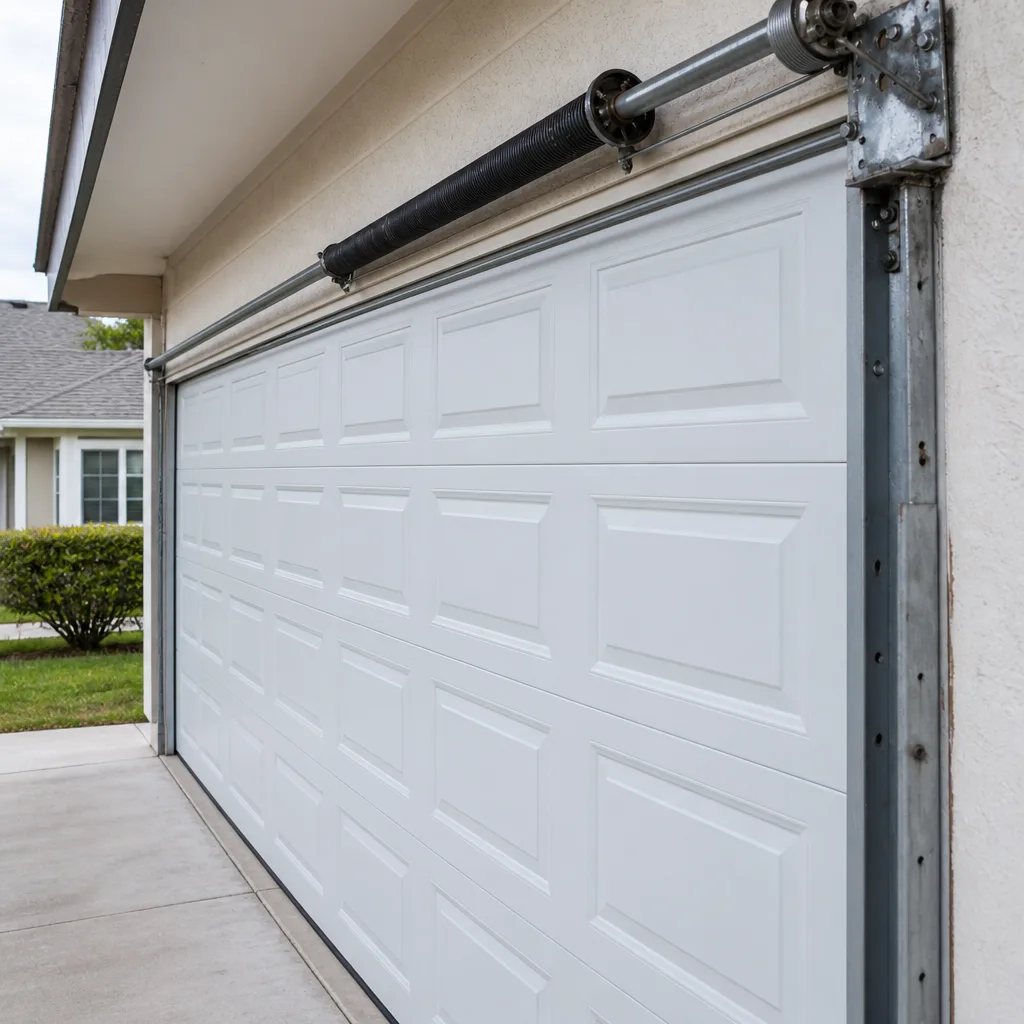
See the difference
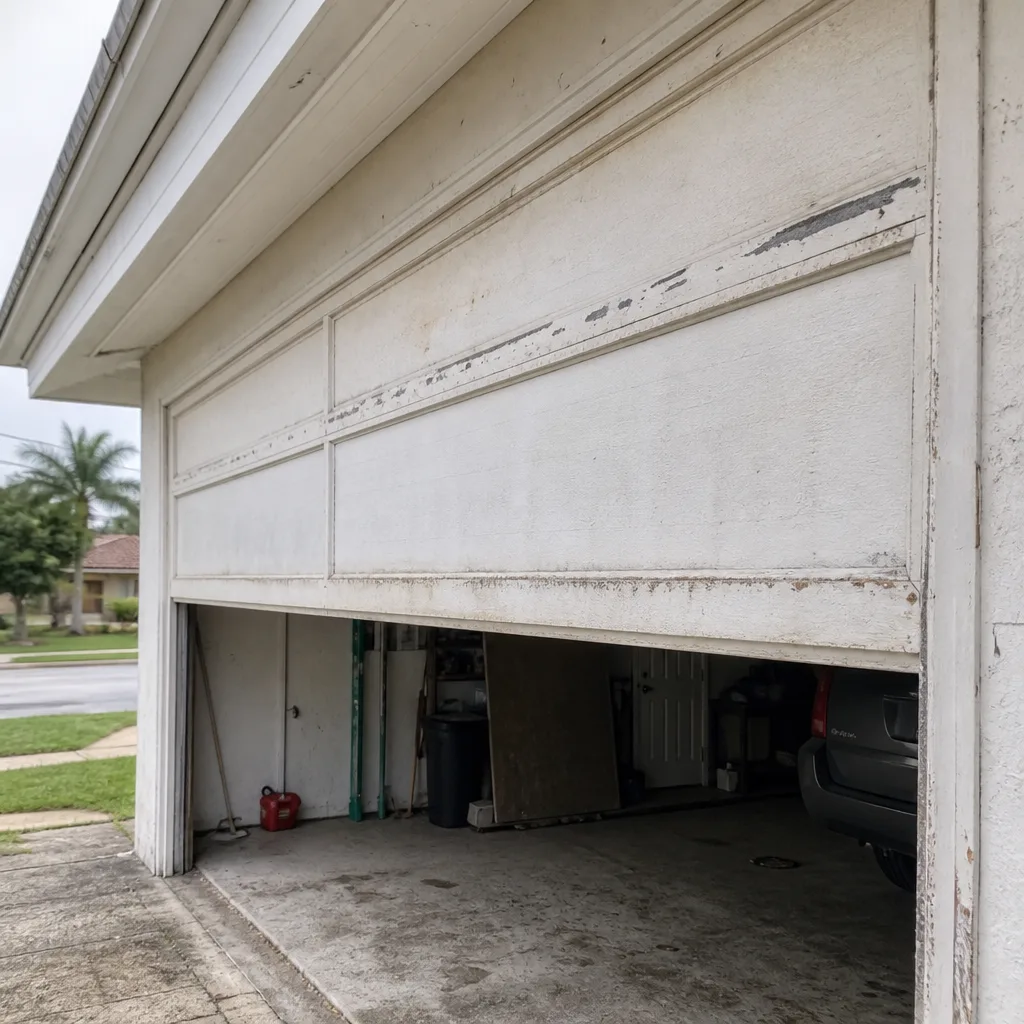 Before
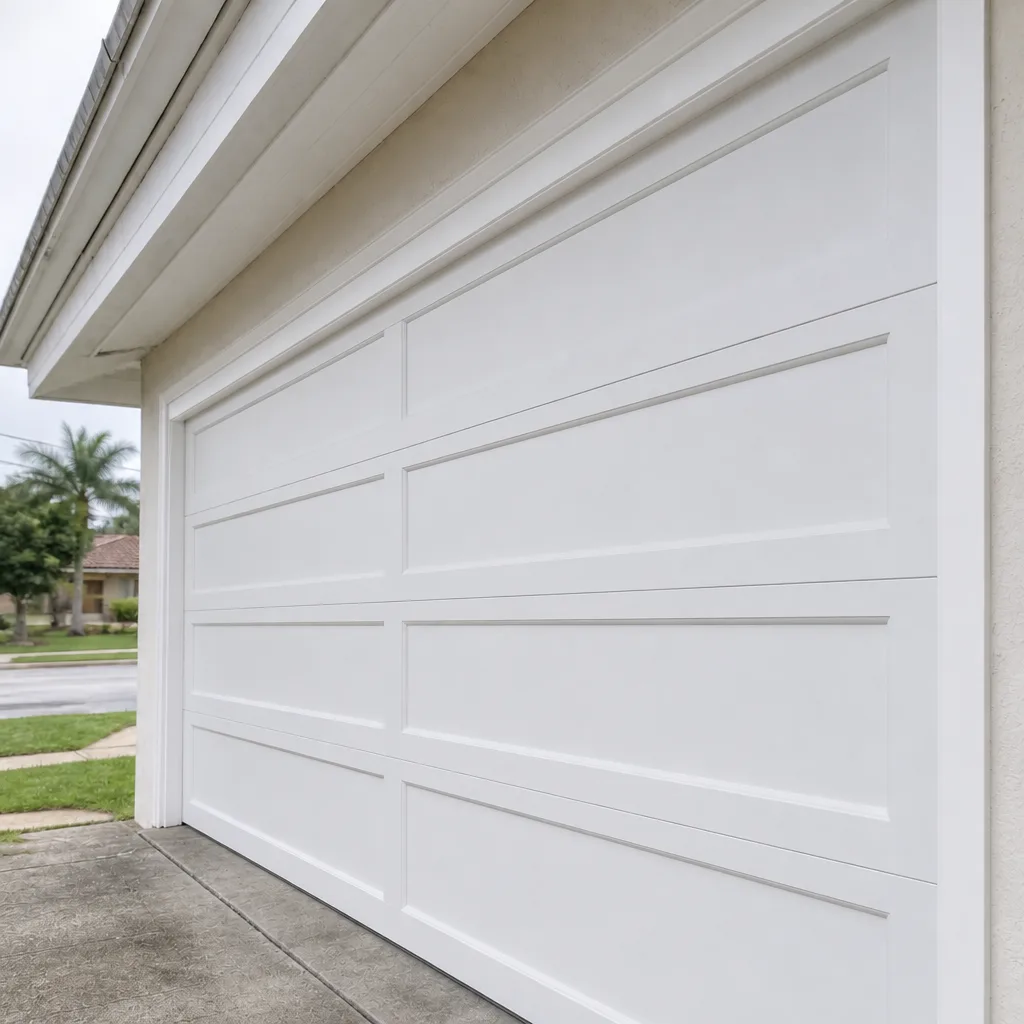 After
 Before
 After
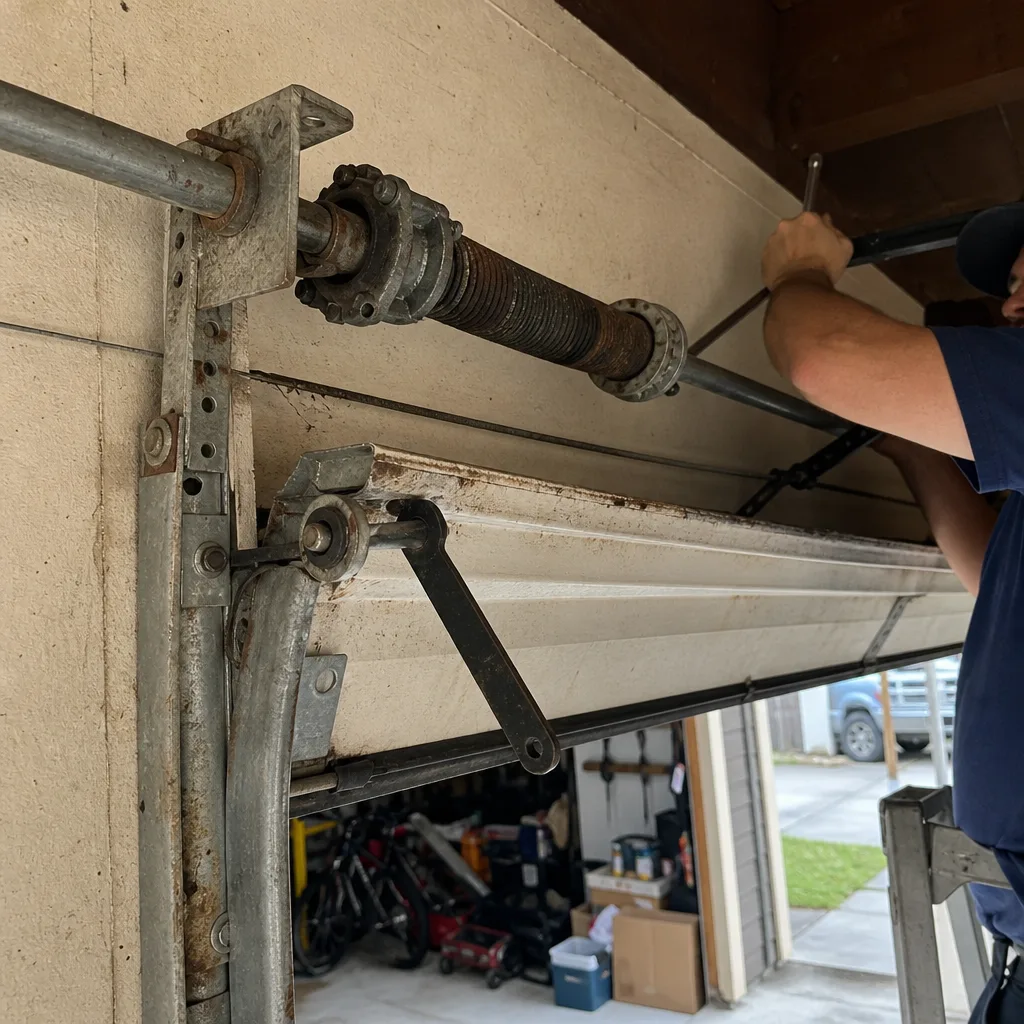 Before
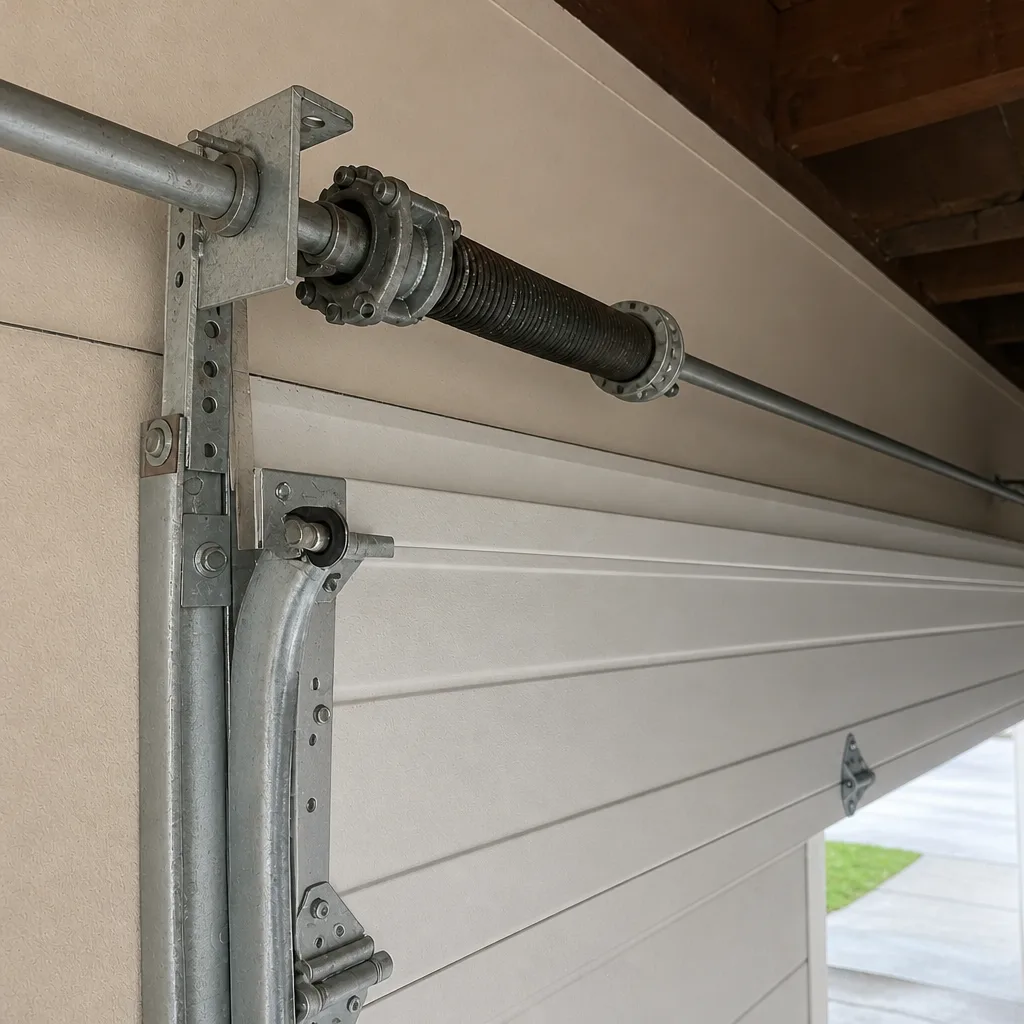 After
When to Call a Professional
Call a professional when the task is Red: torsion spring, cable, track, or full door work. Call a professional when you’re not sure which classification a task falls into. Call a professional when a DIY attempt hasn’t worked after two tries. The cost of a service call is less than the cost of most failed DIY corrections. Fort Lauderdale Garage Door Repair offers free estimates throughout Fort Lauderdale and Broward County, and our phone assessment is always free. Describe what you’re seeing, and we’ll tell you honestly whether it’s worth a service call or whether you can handle it yourself. Call (855) 382-3858.
Frequently Asked Questions
Technically, yes, a homeowner can act as their own contractor for a garage door replacement in Broward County, but the door must still meet Miami-Dade HVHZ wind load standards and pass the same inspection as professional work. In practice, DIY installations rarely pass because the anchoring and reinforcement requirements are not intuitive. Most homeowners find that a professional installation with the permit included is cheaper than a failed DIY inspection cycle.
Professional torsion spring replacement in Fort Lauderdale typically runs $180 to $340 for a single spring and $250 to $450 for a pair, including the springs and labor. Extension spring replacement on older doors usually costs $150 to $250. Exact pricing depends on the door weight, spring type, and access. Call (855) 382-3858 for a free estimate, and the price is quoted and agreed before any work starts.
You can, but the risk is severe. Torsion springs store enough energy to cause serious injury or death if the winding bar slips. Extension springs without safety cables can become projectiles. The cost savings of DIY spring replacement is typically $100 to $200, which is the least amount of money you can save for the highest amount of physical risk in home maintenance.
Lubrication, sensor realignment, keypad and remote reprogramming, weatherstrip replacement, and visual inspection are all safe for any homeowner. These tasks don’t involve stored spring energy or door weight. They cover about 70% of the maintenance a garage door needs, and they’re the best way to save money without risking injury or code violations.
No. Opener replacement and opener repair do not require a permit in Broward County. The permit requirement applies to the door itself, not the motor unit. Homeowners can replace or reprogram their own opener freely, and manufacturers like LiftMaster, Chamberlain, and Genie design their programming for homeowner use.
Check for a wind load label on the door panel or track, usually a small metal tag or sticker with a wind speed rating and a Miami-Dade or Florida product approval number. If you can’t find one, the door may predate the current codes. Homes built after 2002 in Broward County should have wind-rated doors. If yours doesn’t, or you can’t verify it, a professional inspection can tell you whether your door meets current standards or would need replacement or reinforcement before the next hurricane season.
The Bottom Line
You can do more than you think, and less than the internet sometimes suggests. In Fort Lauderdale, the sensible homeowner learns the Green tasks, researches the Yellow tasks, and never touches the Red tasks. The line between Green and Red isn’t about your skill, it’s about the potential cost of a mistake, measured in hospital visits, insurance denials, or a door that fails on the first day of hurricane season. Learn to lubricate, align, and program. Leave springs, cables, tracks, and installation to people who do that work every day. Your opener’s manual is free. A professional assessment is free. The ER trip is not.
Written by the team at Fort Lauderdale Garage Door Repair, serving Fort Lauderdale since 2018.